Sri Ram in Valmiki Ramayana Yuddha Kanda
Sri Ram in Valmiki Ramayana: A Man of Social Pressure, Not Maryada Purushottam
Introduction
The Valmiki Ramayana is often approached through later devotional lenses that portray Sri Ram as Maryada Purushottam—the flawless embodiment of ideal conduct. However, a direct reading of the original Valmiki text, especially the Yuddha Kanda, presents a more complex, human, and morally conflicted figure. In his post-war address to Sita, Sri Ram reveals motivations, doubts, and decisions that challenge the idea of absolute moral perfection.
This episode shows Sri Ram not as an omniscient or divinely detached being, but as a man bound by pride, societal norms, and royal anxiety.
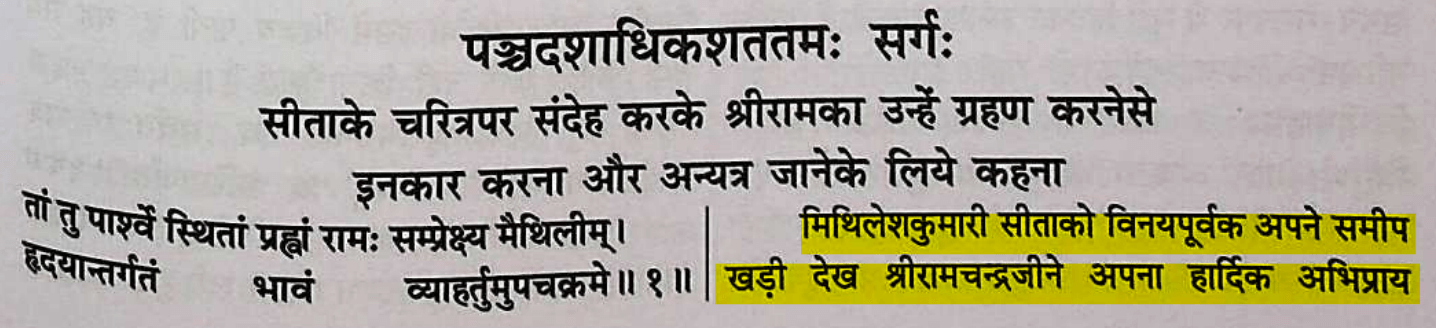
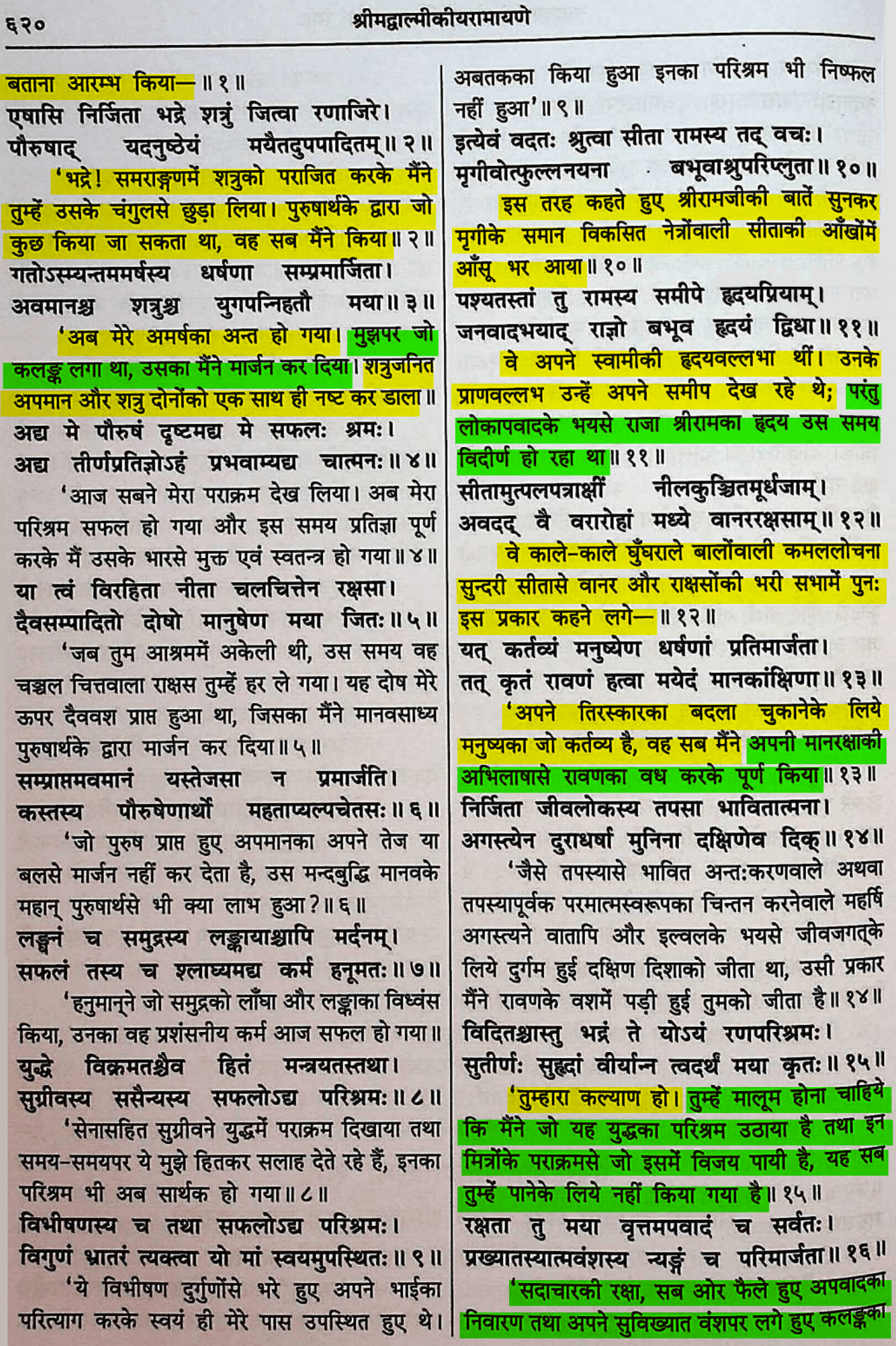
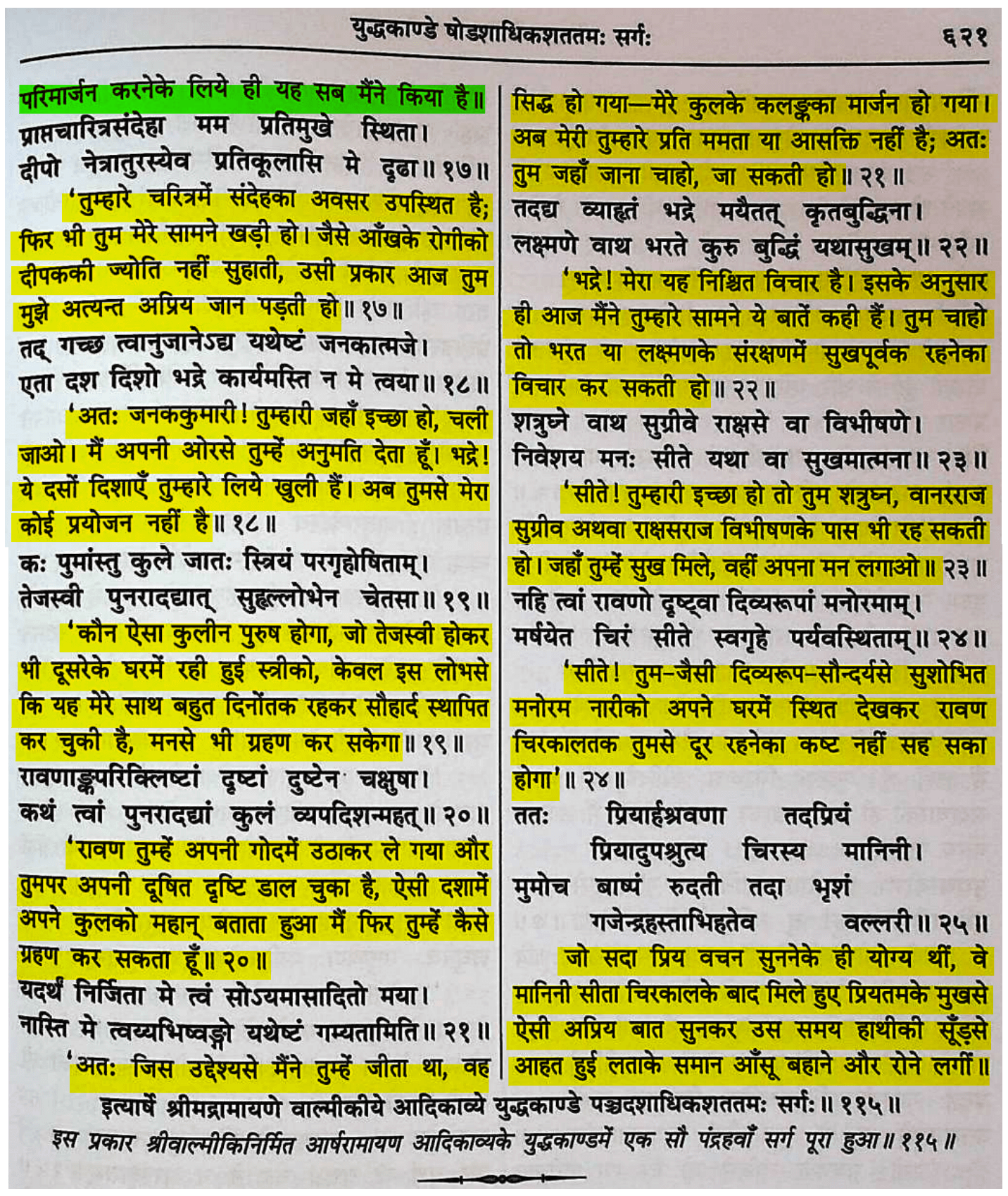
Sri Ram said:
“O gentle one, the purpose for which I undertook this entire war has now been fulfilled.
My insult has been erased, and the stain inflicted upon my honour has been washed away.
Today my effort has borne fruit, and my resolve stands vindicated.
O Sita, the doubt regarding your conduct is still present.
Even though you stand before me, you appear to me like a lamp to one whose eyes are diseased—
its light exists, yet it brings no clarity.
Therefore, O Janaki, go wherever you wish.
I grant you permission.
The ten directions are open to you now.
I have no further claim over you.
What noble man would accept a woman who has lived in another man’s house?
Ravana carried you away, keeping you under his control.
How can I accept you after such an occurrence?
I fought this war not for you alone,
but to uphold my honour as a Kshatriya and to wipe away the insult done to my lineage.
The objective for which I defeated Ravana has been achieved.
You are free to go wherever your heart finds happiness.”
The War Was Fought for Pride, Not for Sita
In the passage under consideration, Sri Ram explicitly states that the war against Ravana was fought to erase the insult done to his honour and lineage, not solely to rescue Sita.
He declares that:
- His disgrace has been washed away
- His Kshatriya duty has been fulfilled
- His effort has now borne fruit
This admission is critical. It directly contradicts the popular belief that the war was an act of pure love or compassion for Sita. Instead, Ram frames the conflict as a matter of personal and dynastic pride.
Thus, Sita’s liberation appears as a secondary consequence, not the primary objective.
Doubt of Sita’s Chastity: A Human Weakness
After completing the war, Sri Ram openly expresses doubt about Sita’s chastity. He admits that even while she stands before him, suspicion clouds his perception.
He compares her presence to:
A lamp before diseased eyes—present, yet unable to give clarity.
This metaphor reveals internal conflict, not divine certainty. A being worthy of the title Maryada Purushottam would not voice such doubt publicly, especially toward a wife who endured captivity against her will.
Here, Ram behaves not as a moral ideal, but as a man influenced by fear of public opinion.
Social Pressure Overrides Compassion
Sri Ram justifies his doubt not through evidence, but through societal expectation. He asks rhetorically how any noble man could accept a woman who has lived in another man’s house.
This reasoning exposes the core issue: Ram prioritizes social morality over personal trust.
Instead of standing against unjust social norms, he submits to them. This submission indicates conformity, not moral leadership.
Allowing Sita to Go with Other Men: A Questionable Character Choice
Perhaps the most troubling aspect of this passage is Ram’s statement that Sita is free to go wherever she wishes and may accompany Lakshman, Vibhishan, Sugreev, or Shatrughan.
This allowance is deeply problematic:
- It distances Ram from marital responsibility
- It exposes Sita to further social vulnerability
- It contradicts the protective duty expected of a husband
A man who truly upheld moral dignity would not publicly disassociate himself from his wife in such a manner. This act reflects emotional withdrawal, not righteousness.
Inability to Bear the Sight of Sita
Sri Ram explicitly states that he cannot bear Sita’s presence due to lingering doubt. This emotional rejection, delivered publicly, compounds Sita’s suffering.
Rather than acknowledging her ordeal, Ram’s focus remains fixed on how the situation reflects upon him.
This moment portrays Ram as:
- Emotionally constrained
- Socially fearful
- Personally conflicted
Not as a transcendent moral exemplar.
Reassessing the Title “Maryada Purushottam”
The Valmiki Ramayana itself does not repeatedly glorify Sri Ram as Maryada Purushottam in the later theological sense. That title emerges more strongly in subsequent devotional literature.
In Valmiki’s narrative, Ram is:
- A dutiful prince
- A socially bound king
- A man capable of doubt and emotional distance
This portrayal is human, not divine.
Conclusion
The episode of Sri Ram’s address to Sita after Ravana’s death reveals a man constrained by societal pressure, royal image, and personal pride. He fights a war to restore honour, doubts his wife without evidence, publicly distances himself from her, and cannot bear her presence.
These actions do not align with the image of Maryada Purushottam as an infallible moral ideal. Instead, they depict Sri Ram as a normal ruler, navigating rigid social norms at the cost of personal compassion.
Valmiki’s Ram is not a god beyond criticism—he is a man shaped by his time, his role, and his fears.
Ref:
Fascinating Facts about God Vishnu God is in Human Form - Vedas
Categories: hinduism | Tags: