Khatu Shyam Story: Did Barbarik Donate His Head? Truth from Skanda Purana
The story of Barbareek, today widely worshipped as Khatu Shyam, is often told as one of sacrifice and devotion. However, the authentic account found in the Skanda Purana presents a very different and far more profound narrative—one that reveals the dangers of power combined with ego and the supremacy of divine will.
Millions of devotees across India chant:
“Haare ka sahara, Khatu Shyam hamara”
With immense faith, they visit the famous Khatu Shyam Temple, believing Khatu Shyam Ji to be a divine savior who supports the defeated and fulfills wishes.
But an important question is increasingly being asked:
What is the real story of Khatu Shyam (Barbarik)? Did he really donate his head to Krishna? Is Khatu Shyam truly God?
To find the truth, we must examine authentic scripture—especially the Skanda Purana, which gives the original account of Barbareek.
Who Is Khatu Shyam? (Barbarik Story from Mahabharata)
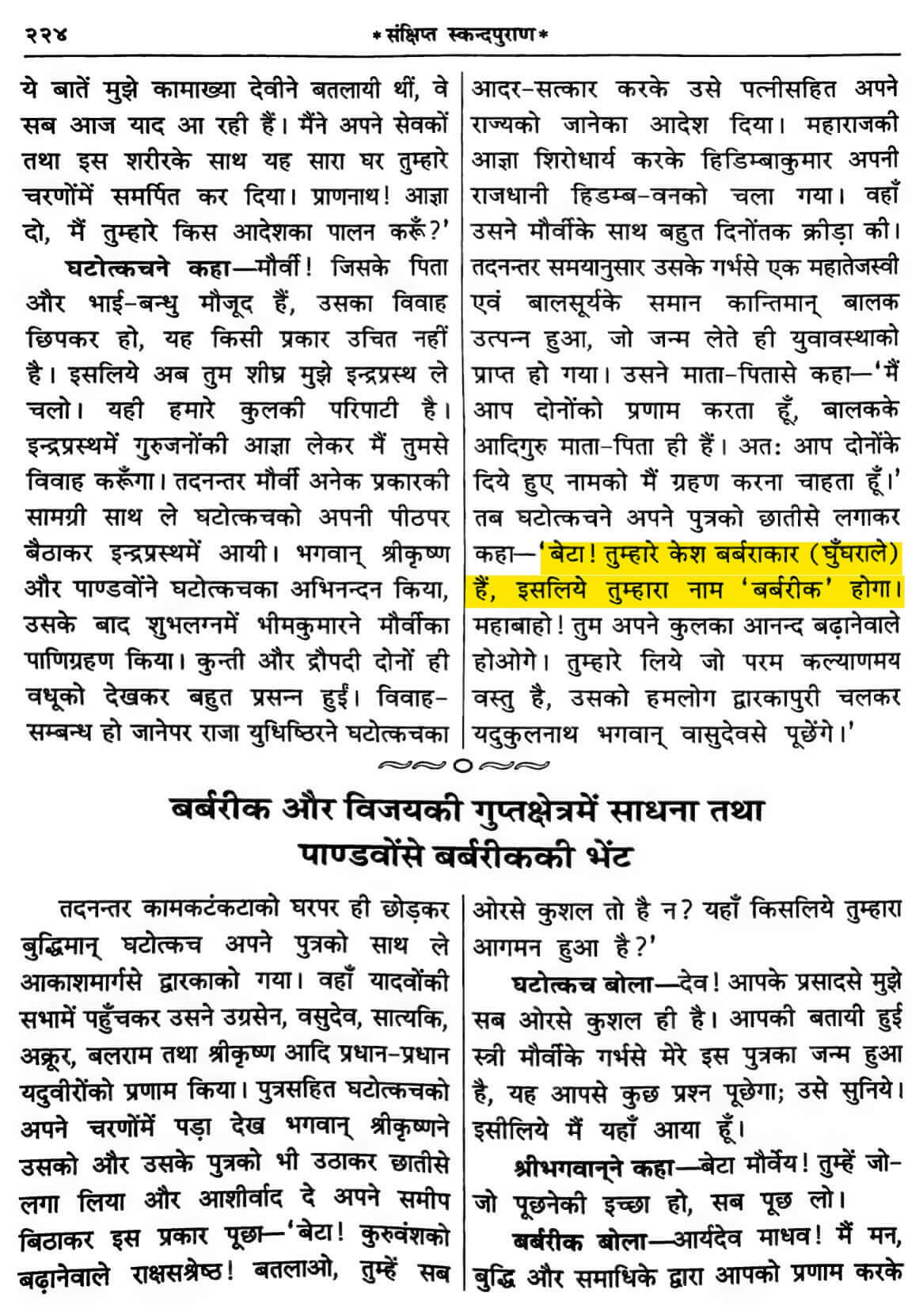
Khatu Shyam Ji is identified with Barbareek (Barbarik), a warrior from the time of the Kurukshetra War. He was grandson of Bhim and son of Ghatotkacha. From a young age, Barbareek showed extraordinary abilities. After intense penance to the Divine Mother, he received divine weapons—most famously, the three arrows.
The Demonstration That Shocked the World
As the great Kurukshetra War approached, Barbareek arrived at the battlefield. There, in the presence of Krishna and the greatest warriors—Bhishma, Drona, Karna, and others—he was questioned about his ability.
In response, Barbareek performed a terrifying demonstration.
He took a single arrow, infused it with divine ash, and released it.
That arrow moved across the battlefield with precision, marking the vital points (marmas) of nearly every warrior in both armies. Only a few, protected by divine grace, remained untouched.
Then he declared with confidence:
“I can destroy all these warriors within moments. You need not fight. I alone am sufficient.”
This statement stunned everyone present.
The 3 Arrows of Khatu Shyam (Barbarik)
“What were the 3 arrows of Khatu Shyam?”
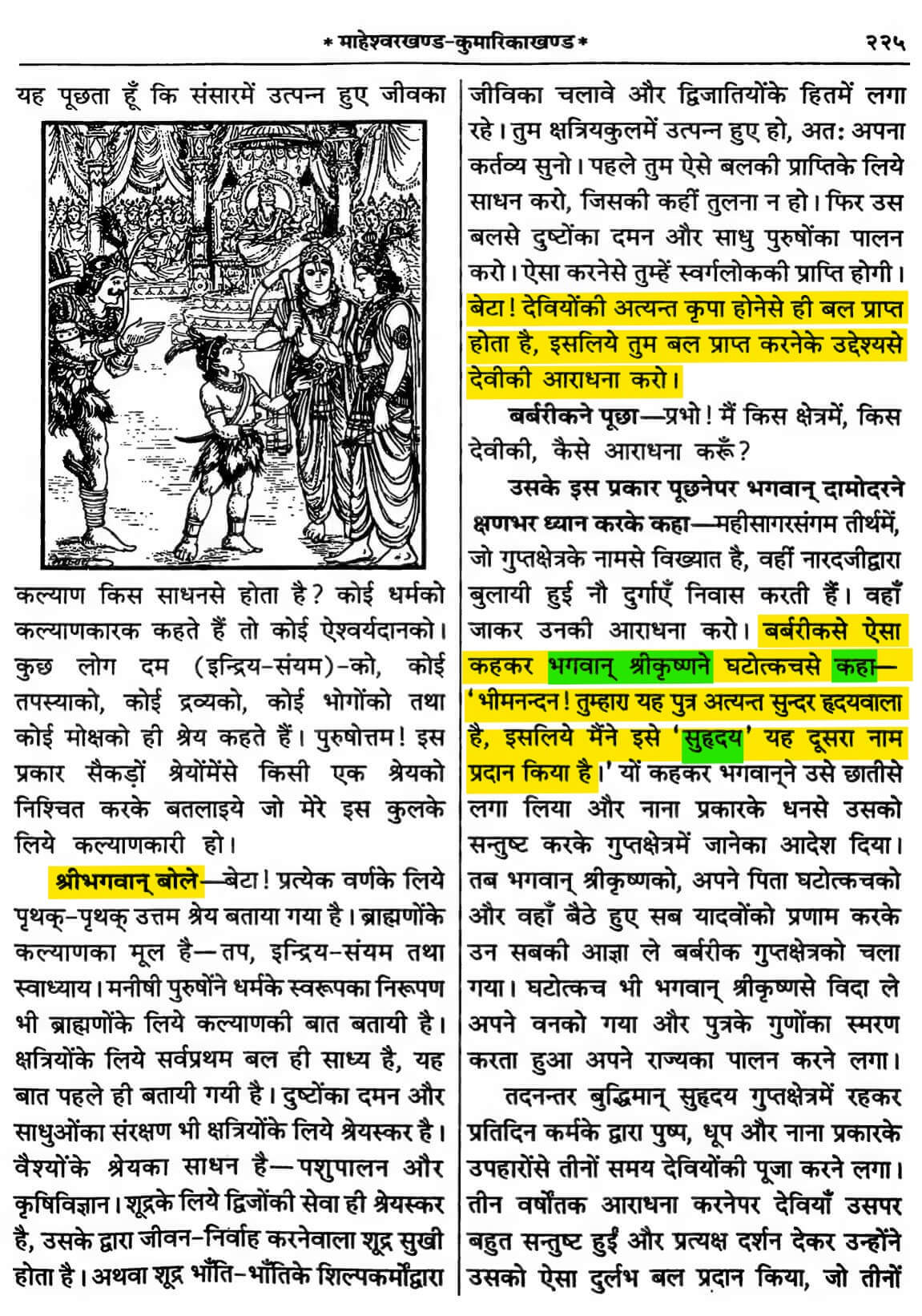
Barbareek received these arrows as a boon from the Goddess he worshipped.
Powers of the three arrows:
- First arrow → Marks everything to be destroyed
- Second arrow → Marks everything to be saved
- Third arrow → Destroys all marked targets and returns
With just these three arrows, he could:
- Destroy entire armies instantly
- Control destruction with perfect precision
- Decide the outcome of any war
This is why he confidently declared he could end the Kurukshetra War alone. But this power led to something dangerous—ego (ahamkara).
The Critical Turning Point
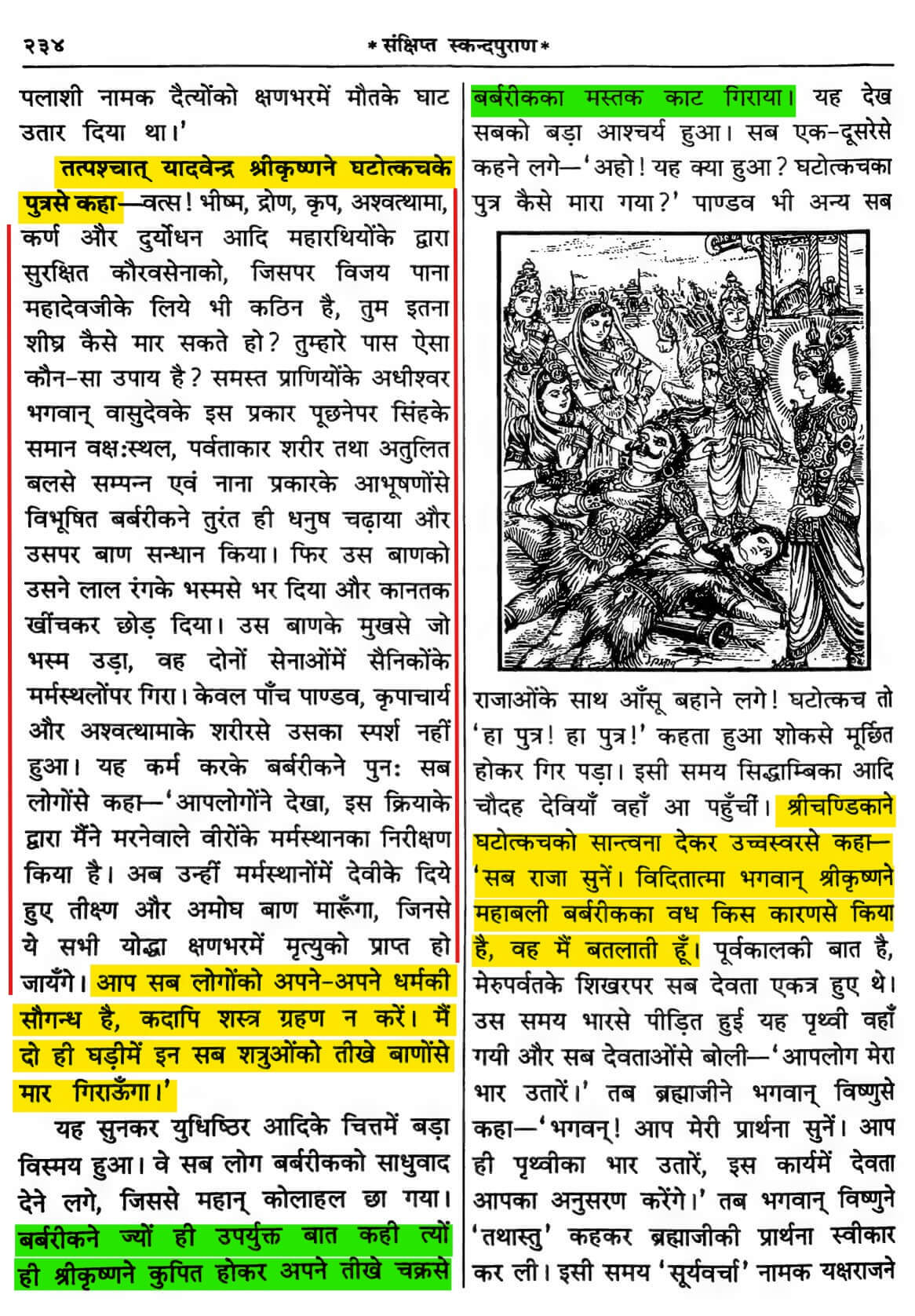
According to the Skanda Purana, after witnessing this demonstration, Krishna spoke to Barbareek and questioned how he intended to defeat such powerful warriors protected by great महारथी like Bhishma, Drona, Karna, and others.
Barbareek confidently explained his method—he would mark all warriors and destroy them instantly with his arrows.
He even went so far as to say that within two ghadi (a very short time), he could eliminate all warriors on the battlefield.
The Sudden and Decisive Act
At that very moment, as described clearly in the Skanda Purana, Krishna became angered. Without delay, without asking for any charity, and without any ritual or request — Krishna used the Sudarshana Chakra and severed Barbareek’s head instantly.
Why Did Krishna Kill Barbarik?
When Barbareek reached the battlefield, he demonstrated his power before Krishna. He then made a bold claim that the Pandavas were not needed, Krishna was not needed and he alone could destroy both armies. This statement directly challenged the divine purpose of the war.
According to the Skanda Purana:
- Barbareek’s arrogance posed a threat to dharma
- He was also bound by a past-life curse from Brahma
What did Krishna do?
Krishna immediately beheaded Barbareek using the Sudarshana Chakra.
This was:
- A decisive action, not a request
- A response to ego, not a ritual
- Done out of anger, not a voluntary sacrifice
Did Khatu Shyam Really Donate His Head?
This is one of the biggest myths.
Popular belief:
- Krishna asked for Barbareek’s head as daan and Barbareek willingly donated it. Thus he became a symbol of sacrifice.
Scriptural reality (Skanda Purana):
- There is no charitable donation described
- There is no voluntary offering
- His head was severed instantly by Krishna
Conclusion:
Khatu Shyam did NOT donate his head—he was beheaded due to ego and divine necessity.
What Happened After His Death?
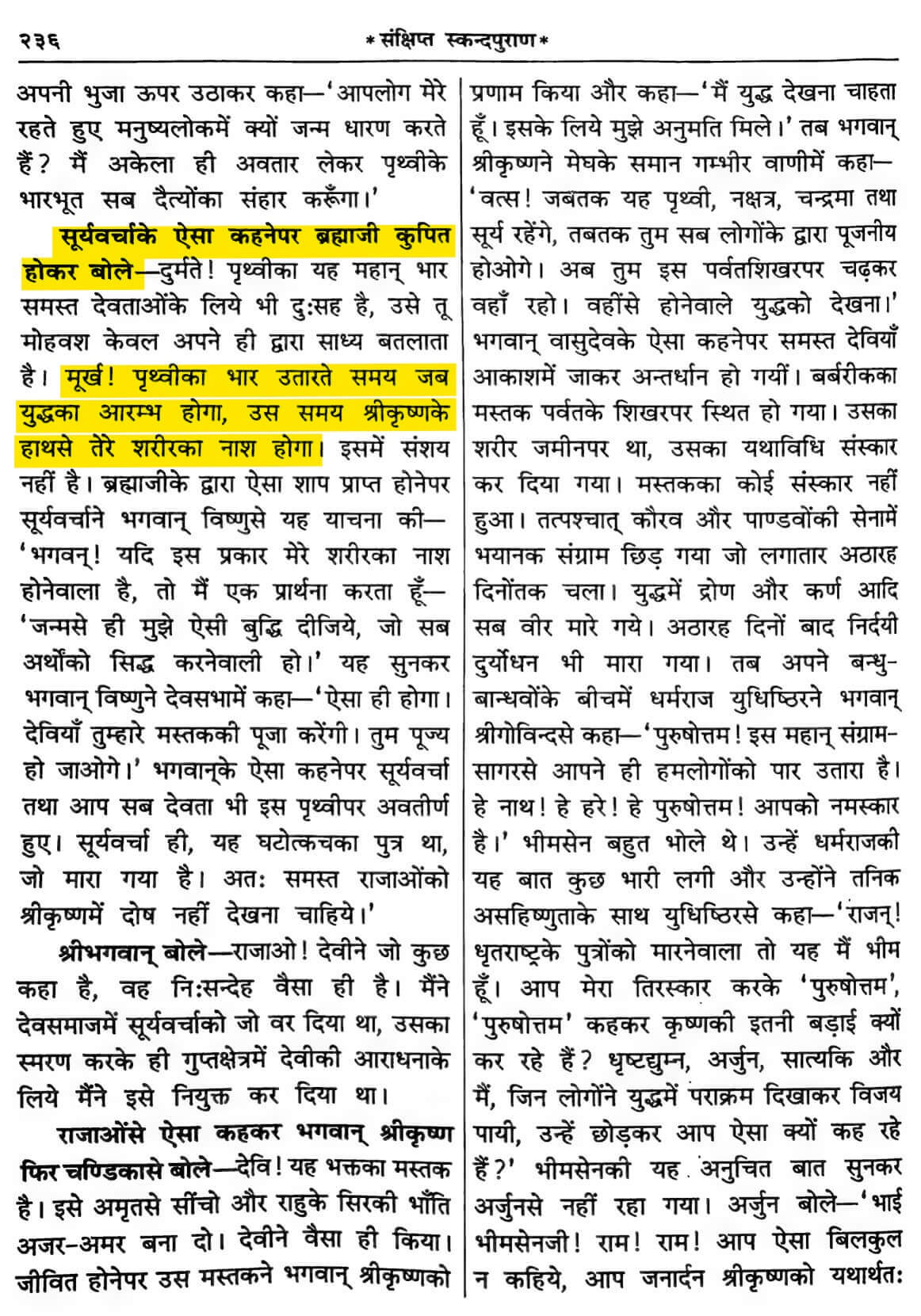
After Barbareek’s beheading, the battlefield fell silent in astonishment. Ghatotkacha, his father, was overcome with grief. The Divine powers (Devis) appeared. At this point, as described in the text, an explanation was given. Krishna had slain Barbareek for a reason—his immense power combined with ego posed a threat to the divine balance of the war. This act was not cruelty—it was cosmic necessity. He had a curse on him from his previous life which made sure Barbareek died at the hands of Krishna.
After his beheading his head was granted consciousness and it was placed on a hill to watch the war from where it witnessed the entire Kurukshetra War. At the end, it declared that victory was due to Krishna’s divine power—not the Pandavas. Over time, this led to devotion and eventually worship as Khatu Shyam.
“Haare Ka Sahara Khatu Shyam Hamara” – Is It True?
This famous phrase means:
“Khatu Shyam is the support of the defeated.”
But let us examine this logically and scripturally:
- Barbareek could not protect himself
- He was killed instantly
- He was bound by curse and karma
If he could not save his own life, can he truly be the ultimate savior?
Is Khatu Shyam God?
This is the most important question.
From the Skanda Purana:
Barbareek:
- Took birth
- Gained powers through penance
- Developed ego
- Was cursed
- Was killed
But the Supreme God is:
- Unborn
- Eternal
- Indestructible
- Beyond karma
- Independent of all powers
Therefore:
Khatu Shyam (Barbareek) is NOT the Supreme God.
The Real Lesson of Barbareek’s Story
The story is not meant to promote worship, but to teach:
- Ego destroys even the most powerful
- Divine will is supreme
- Power without humility leads to downfall
Final Conclusion
The real story of Khatu Shyam, based on the Skanda Purana, reveals:
- He was a powerful warrior, not God
- His head was not donated—it was severed
- His story is a warning against ego, not a basis for worship
The truth is clear:
Belief must be guided by scripture, not just tradition.
Skand Puran - Gita Press Gorakhpur
Ref:
Mahavir Jain | Jainism Creationism - Genesis
Categories: religions | Tags: