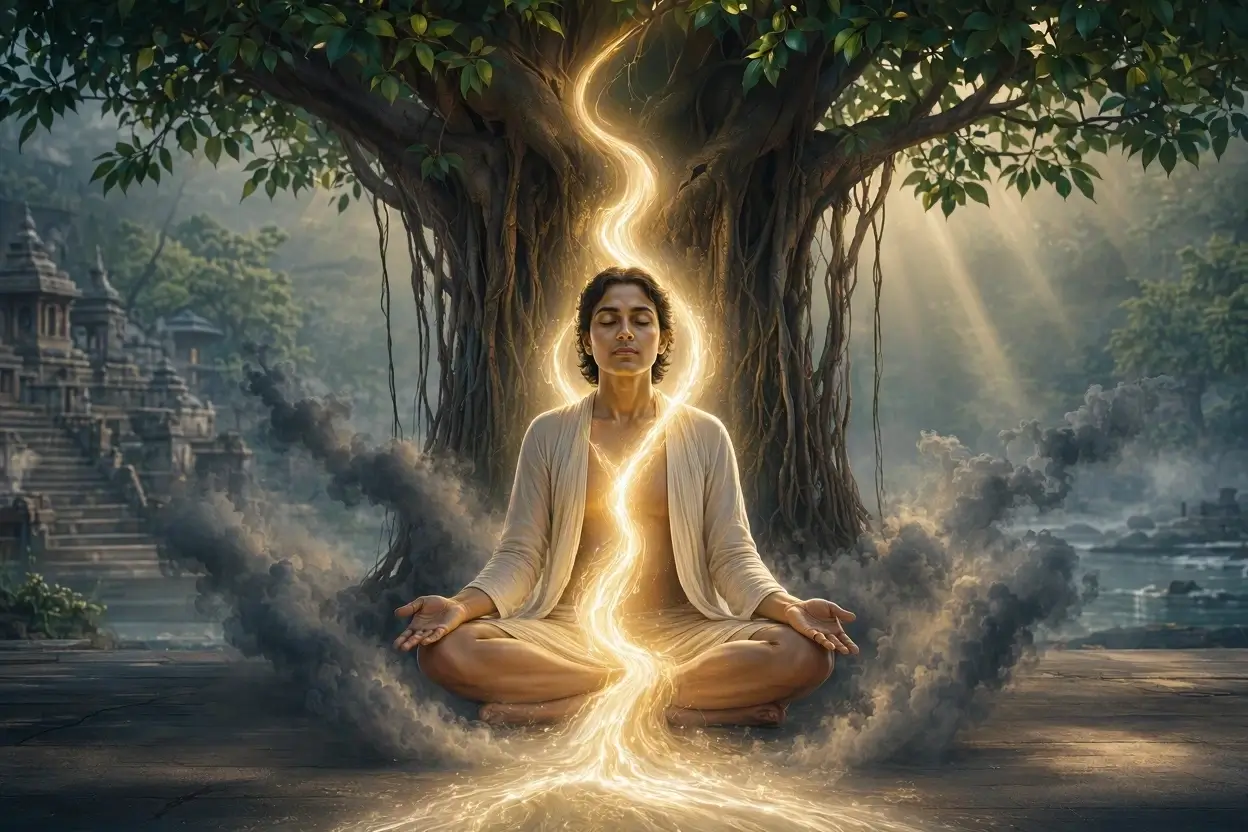
Shrimad Devi Bhagavata Purana: The Scripture of the Supreme Goddess
The Devi Bhagavata Purana, also known as the Shri Bhagavata Mahapurana, is one of the most revered texts of Shaktism—the tradition that worships the Supreme Reality in the form of the Divine Mother. Composed by Maharshi Veda Vyasa, this Purana contains 18,000 verses divided into twelve Skandhas (cantos), and stands alongside texts like the Devi Mahatmya as a primary scripture describing the glory, supremacy, and compassion of Adi Shakti.
It is one of the most profound texts in ancient Indian philosophy, delivering supreme knowledge regarding the origin of the cosmos and the divine hierarchy. Unlike texts that position the Trimurti as ultimate, this Purana reveals Goddess Durga (Adi Maya / Mula Prakriti) as the primordial mother of Brahma, Vishnu, and Shiva, and explores their roles within the vast cycle of creation, preservation, and dissolution.
Whether you are seeking to understand the cosmic timeline or the deep laws of destiny, this comprehensive guide serves as your central repository for decoding the text's hidden truths.
Central Theme: The Goddess as the Supreme Being
Unlike other Puranas that emphasize the Trimurti—Brahma, Vishnu, and Shiva—the Devi Bhagavata Purana places the Goddess above all. She is described as:
- The source of creation, preservation, and destruction
- The origin of Brahma, Vishnu, and Shiva
- The energy (Shakti) that empowers all beings
- The eternal, infinite, and self-existent reality
The text consistently shows that even the highest gods look to Her for guidance, strength, and liberation.
Key Narratives
The Purana includes profound stories that illustrate the supremacy of the Goddess, such as:
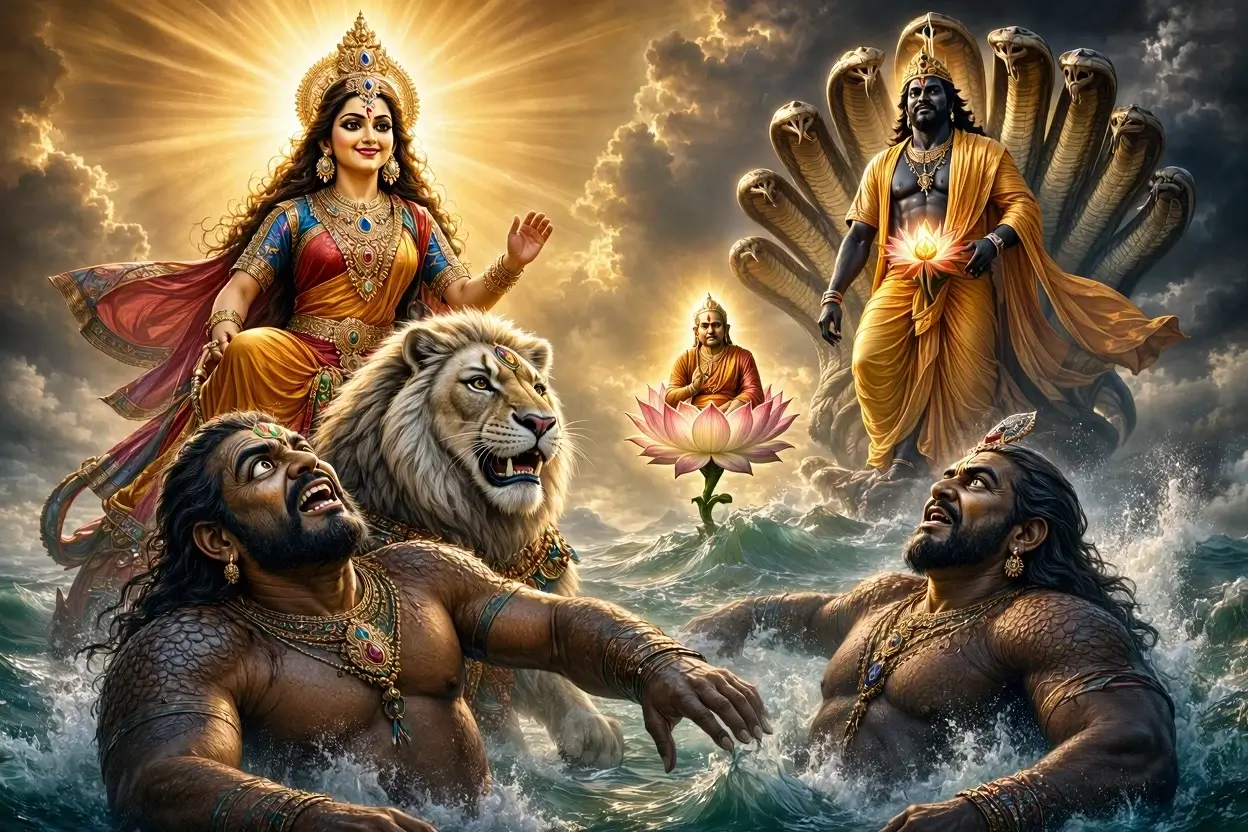
- The slaying of Madhu and Kaitabha through Her power
- The revelation of Manidvipa, the highest divine realm where She eternally resides
- The teachings on creation, cosmology, devotion, and liberation
- The birth and roles of various goddesses and Shaktis
- Dialogues between sages and deities explaining spiritual truths
These narratives convey that without the Devi’s presence, the universe cannot function for even a moment.
Philosophical Depth
The Devi Bhagavata Purana blends:
- Bhakti (devotion)
- Jnana (spiritual wisdom)
- Yoga
- Cosmology
- Ethical teachings
It describes the Goddess not only as the creator of the physical universe but also as the inner consciousness within all beings. Liberation, according to this text, is attained through Her grace and the realization of Her presence as the supreme Self.
Importance in Hindu Tradition
For followers of Shaktism, the Devi Bhagavata Purana is considered:
- A Mahapurana (great Purana)
- A scriptural foundation for worship of the Divine Mother
- A text of ultimate authority on the nature of Shakti
- A manual for spiritual practice, rituals, and devotion
It has shaped centuries of goddess worship and remains central to the understanding of Shakti as the highest divinity.
Explore the Deep-Dives (In-Depth Chapters)
To truly grasp the cosmic architecture revealed by Maharishi Ved Vyas and Narada Muni, explore our detailed sub-sections and text analyses:
| Topic / Link | Core Content Focus |
|---|---|
| Analysis of Shrimad Devi Bhagwat Purana | A critical look at the philosophical core of the text, comparing its cosmic hierarchy against other major Puranas. |
| Battle of Madhu and Kaitabha with Vishnu | The thrilling account of Brahma’s 5,000-year penance and how Goddess Durga awakened Shri Hari to conquer primordial chaos. |
| Marriage of Brahma, Vishnu, and Shiv | Discover how Bhagavati Durga bestowed the divine Shaktis—Maha Sarasvati, Maha Lakshmi, and Maha Kali—upon the Trimurti to govern the universe. |
| Chitta Shuddhi Tirtha in Devi Purana | An esoteric exploration of mental purification and the sacred spiritual landscape detailed in the text. |
| The Law of Karma | Understand how actions, the three Gunas, and the binding force of Maya dictate human suffering and ultimate liberation in Samsara. |
The Cosmology of Skand 3
In the third Skand of the Devi Bhagwat Purana, King Janamejaya poses foundational doubts to Sage Vyas about the mortality of the gods and the true cause behind the cosmic egg (Brahmanda). The text systematically dispels the illusion of independent deities, establishing that even Brahma, Vishnu, and Shiva operate under the supreme command of Brahm Kaal and Adi Shakti.