Vishnu Purana: Summary, Structure, and Key Teachings

The Vishnu Purana is one of the eighteen Mahapuranas of Hinduism and serves as a foundational text for the Vaishnavism tradition. Traditionally attributed to Sage Parashara (the grandfather of Vyasa), the text is celebrated for its poetic style and deep philosophical discussions regarding the nature of the universe and the supreme divine reality.
Structure and Content of the Vishnu Purana
Unlike some other Puranas, the Vishnu Purana has been remarkably well-preserved and follows the traditional Pancha Lakshana (five characteristics) of a Purana, which include the creation of the world, its destruction and renovation, genealogies of gods and patriarchs, reigns of the Manus, and the history of royal dynasties.
The text is comprehensively structured into six parts (Anshas) containing approximately 23,000 verses:
- Pratham Ansh (Part 1): Details the creation of the universe, cosmic cycles (Yugas), and the famous stories of devotees like Dhruva and Prahlada.
- Dwitiya Ansh (Part 2): Describes the geography of the earth, the planetary systems, and the concept of hell worlds.
- Tritiya Ansh (Part 3): Focuses on the duties of the four varnas, the stages of life (Ashramas), and traditional ancestral rites (Shraadh).
- Chaturth Ansh (Part 4): Outlines the extensive genealogies of solar and lunar royal dynasties.
- Pancham Ansh (Part 5): Entirely dedicated to the life, pastimes, and miracles of Shri Krishna.
- Shastham Ansh (Part 6): Discusses the characteristics of Kali Yuga, the dissolution of the cosmos, and the ultimate path to liberation.
Deep Scriptural Insights & Analysis
While the standard narratives offer immense cultural value, a deeper examination of the text—particularly through the authoritative Gita Press Gorakhpur editions—reveals specific, hidden metaphysical truths about the underlying cosmic rulers and proper methods of worship. Explore our detailed sub-guides below to examine the verses directly:
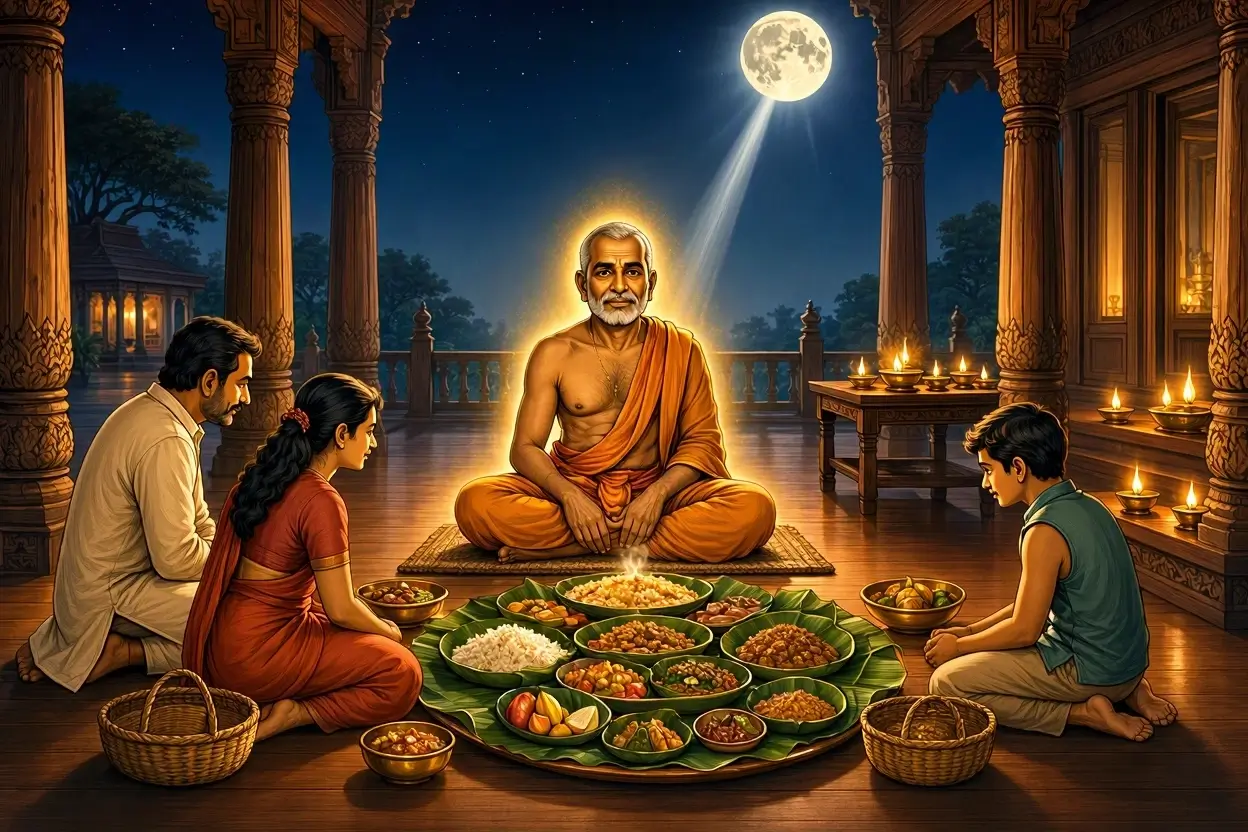
- Vishnu Purana Shraadh Method: Why feeding a true Yogi outweighs 1,000 Brahmins
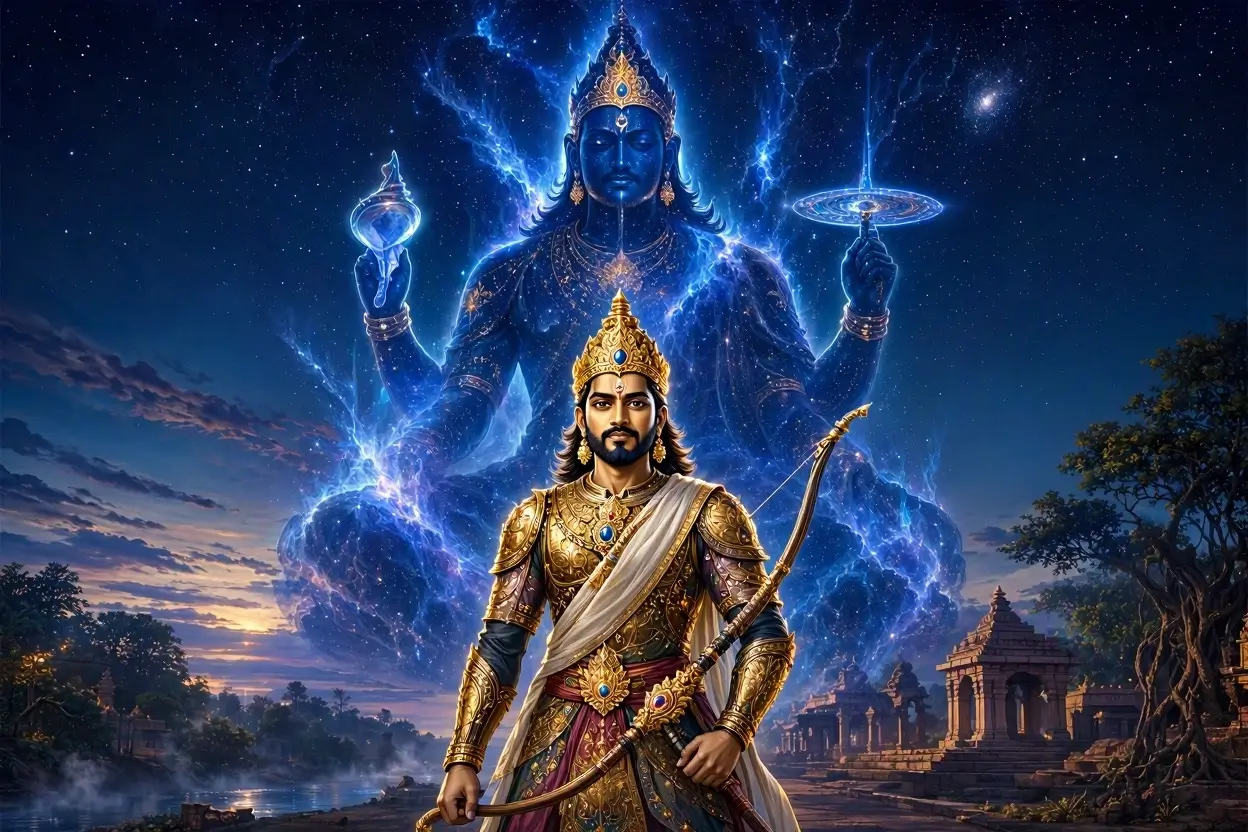
- The Secret of God Kaal: How Brahm remains hidden using the forms of Mahavishnu, Puranjaya, and Purukutsa
Chronicles of Brahma's Fifth Head - Shiv Puran God Kaal in Vishnu Purana: Mahavishnu & Hidden Form Explained