Is Prophet Muhammad the Kalki Avatar? Bhagavad Purana Explained
What does Bhagavad Purana about Kalki Avtar and Prophet Muhammad?
In comparative religious discussions, few topics spark as much curiosity as the prophecy of the Kalki Avatar - the tenth and final incarnation described in Hindu Puranic texts.
Over the years, speakers such as Dr Zakir Naik have pointed to passages in the Shrimad Bhagavad Purana and the Kalki Purana, drawing parallels between the predicted arrival of Kalki and the life of Prophet Muhammad. At first glance, some of the linguistic comparisons sound remarkably close. Yet, when we read the surrounding chapters in their complete context, a striking timeline discrepancy changes the entire picture.
The Claim: Parallels Drawn Between Kalki and Prophet Muhammad
To support the idea that the Puranas foretell Prophet Muhammad, proponents typically highlight several symbolic similarities:
- Parents' Names: The texts state that Kalki will be born to a father named Vishnuyash (translated as "Servant of God," paralleling Abdullah) and a mother named Sumati (meaning "peace," paralleling Amina).
- Birthplace and Lineage: Kalki is said to appear in Shambhala (interpreted as a "place of peace," akin to Mecca or Dar-ul-Aman) in the household of the village chief, mirroring the Prophet's birth into the leading Quraysh tribe.
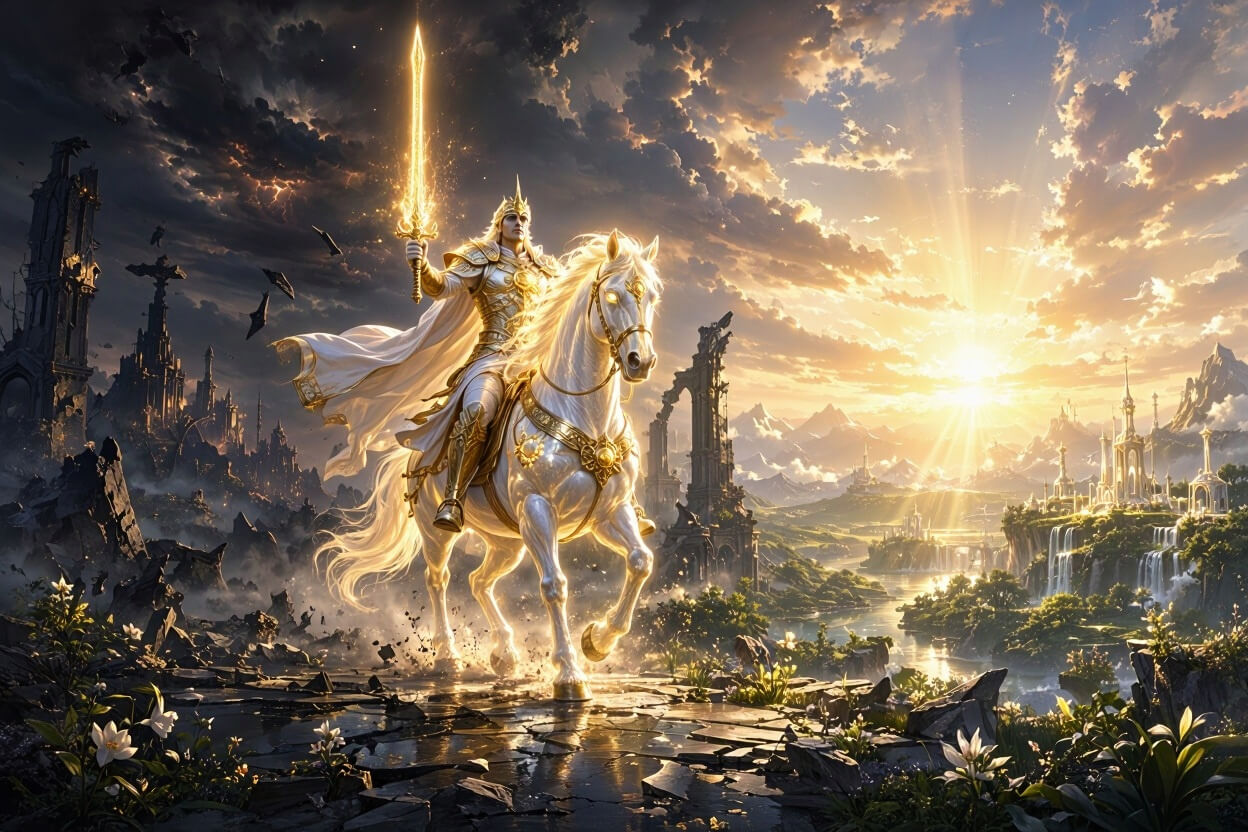
- Date and Companions: The texts mention the 12th day of the month of Madhava (compared to the 12th of Rabi' al-Awwal), four close companions who aid him in battle (compared to the four Khulafa-e-Rashideen), and riding a white steed with a sword to lead humanity from darkness into light.
The Missing Context: When Does the Kalki Avatar Actually Arrive?
While matching isolated names and symbols can seem compelling on the surface, reading the 12th Canto, Chapter 2 of the Shrimad Bhagavad Purana from start to finish reveals a crucial detail: the exact era in which Kalki is destined to appear.
According to the scripture, the Kalki Avatar does not arrive during the early or middle stages of Kali Yuga (the current age). Instead, he appears at the very end of Kali Yuga, right before the dawn of a new Golden Age (Satyuga), when the world has undergone extreme physical and environmental collapse:
- Drastically Shortened Lifespans: The text explicitly states that at the time of Kalki's arrival, the maximum human lifespan will have shrunk to just 20 or 30 years.
- Physical Shrinking of Life: As the environment deteriorates, human stature will diminish to roughly two-and-a-half or three feet, and cows will shrink to the size of goats, yielding very little milk.
- Collapse of Civilisation and Nature: Rainfall will cease, topsoil will lose its fertility, human beings will live underground in burrows, and society will descend into total lawlessness where rulers behave like thieves.
Why the Historical Timeline Does Not Match
When we compare these scriptural conditions against historical reality, the timeline simply does not align with the 6th and 7th centuries AD - when Prophet Muhammad lived roughly 1,400 years ago:
- Human Longevity: During the Prophet's lifetime, people routinely lived well into their 60s, 70s, and even beyond 100 years - nowhere near the 20-year maximum lifespan foretold for the era of Kalki.
- The Natural World: Agriculture, livestock, human height, and rainfall during 7th-century Arabia were completely normal, bearing no resemblance to the apocalyptic conditions described at the end of Kali Yuga.
- Who Kalki Actually Is: According to traditional Vedic and Puranic lore (Sukshma Veda), the future Kalki Avatar - who is yet to appear thousands of years from now at the end of this age - will be the soul of the legendary truth-keeper Raja Harishchandra, descending under divine command to cleanse extreme wickedness before nature rejuvenates the Earth for Satyuga.
The Takeaway
Reading sacred texts in full context is essential for genuine understanding. While matching translated names from the Puranas to historical figures may sound persuasive in short clips, the Shrimad Bhagavad Purana places the arrival of the Kalki Avatar in a distant, apocalyptic future that has not yet occurred. Letting scriptures speak within their own complete narrative prevents confusion and brings clarity to comparative spiritual study.
See the video below by Sant Rampal Ji Maharaj which shows the full Bhavishya Purana and the truth.
Prophet Muhammad in Bhavishya Purana The True Story of Mansur Al-Hallaj (Mansur Ali) and Shams Tabrizi