Surah Al-Ikhlas & Allah Kabir: The Touchstone of Theology Explained
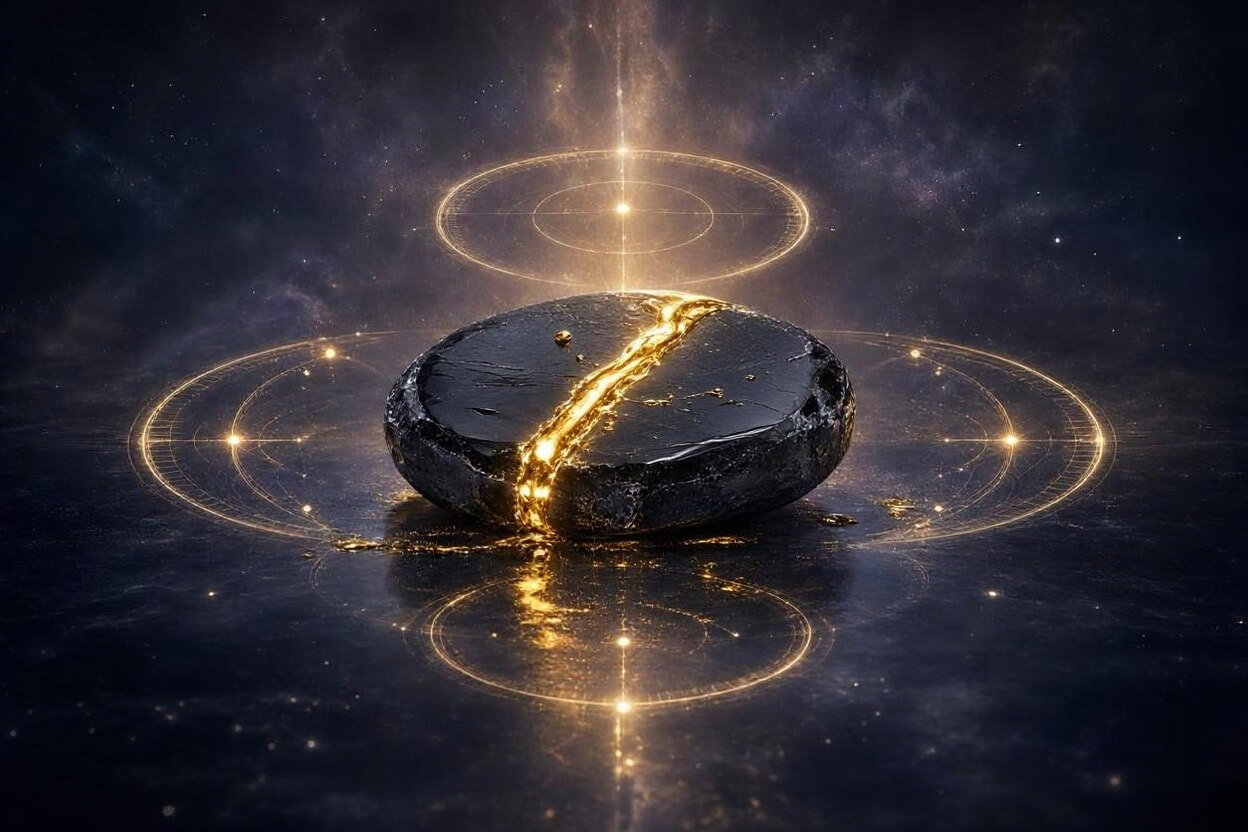
The "Touchstone of Theology": How Surah Al-Ikhlas Reveals the True Identity of the Supreme God
Imagine walking into a jeweller's shop with a piece of gleaming yellow metal. How do you know if it is pure gold or merely a clever imitation? A jeweller rubs it against a dark stone - a touchstone - to reveal its true purity.
In the world of spirituality, Surah Al-Ikhlas (Chapter 112) of the Holy Quran serves that exact purpose. Often called the "Touchstone of Theology," these four brief verses provide a universal litmus test to verify whether a deity is truly the Supreme Creator of the universe.
When we hold history and ancient scriptures up to this four-point test, an extraordinary picture emerges - one that points directly to Supreme God Kabir (Allah Kabir).
The 4 Criteria of the Ultimate Creator
To separate true divinity from myth, Surah Al-Ikhlas lays down four unmistakable truths about the Almighty:
- God is One (Qul Huwa Allahu Ahad): There is only one supreme, ultimate Creator.
- God is Self-Sufficient (Allahu Samad): He is entirely independent, needing nothing from anyone.
- He Neither Begets Nor is Born (Lam Yalid Wa Lam Yulad): The Supreme God does not enter the world through a mother's womb, nor does He have biological parents or offspring.
- None is Comparable to Him (Wa Lam Yakun Lahu Kufuwan Ahad): No power in creation rivals His majesty or capability.
Passing the Test: A Divine Appearance Without Birth
While countless prophets, sages, and revered figures have walked the Earth, almost all entered the world through human birth and departed through physical death. Yet, historical and scriptural records describe a remarkable exception in Kabir Sahib, who lived in the ancient city of Kashi (Varanasi) for 120 years in the humble guise of a weaver.
Rather than being born from a mother's womb, He descended directly from His eternal realm in bodily form, appearing as a radiant infant resting upon a lotus flower in Lahartara Lake. There, a childless Muslim weaver couple, Neeru and Neema, discovered Him and brought Him home.
Interestingly, this miraculous arrival mirrors an ancient prophecy in the Rigveda (Mandal 9, Sukta 1, Mantra 9), which foretells that when the Supreme God descends to Earth, He assumes an infant-like form and is nourished by the milk of a maiden cow—a phenomenon witnessed firsthand during Kabir Sahib's childhood.
Shattering Superstition and Departing Without Death
Just as He arrived without taking birth, Kabir Sahib departed from this world without experiencing death - fulfilling the Quranic truth that the Supreme Creator is completely immortal.
In 1518 AD, a deeply entrenched superstition gripped the region. Religious orthodoxy claimed that anyone who died in the holy city of Kashi went straight to heaven, while anyone who died in the town of Maghar was cursed to suffer in hell or be reborn as a donkey. Determined to dismantle this blind dogma and prove that pure devotion - not geography - shapes a soul's destiny, Kabir Sahib intentionally travelled to Maghar for His final departure.
As news spread, two powerful rulers who were both His devoted disciples - Muslim Nawab Bijli Khan Pathan and Hindu King Birdev Singh Baghel - arrived at Maghar accompanied by their armies. Tensions quickly escalated on the plains. Both factions stood ready to go to war to claim His body: the Muslims wished to bury Him according to Islamic rites, while the Hindus insisted on cremating Him according to Hindu traditions.
Before a single drop of blood could be shed, Kabir Sahib intervened. He sternly reminded both rulers of His teachings on peace, instructed them to lay down their weapons, and lay down beneath a white sheet.
Moments later, a resounding voice echoed from the heavens, urging the gathered crowds to look upward. As thousands watched in stunned silence, Kabir Sahib ascended toward His eternal abode (Satlok) in His physical body. When the followers rushed forward and lifted the white sheet on the ground, there was no body to be found - only a mound of fresh, fragrant flowers.
Overwhelmed by the miracle, the rival armies dropped their weapons and embraced one another in tears. A catastrophic war was averted in an instant, and the flowers were divided equally to build two memorials standing side by side - a lasting monument to unity.
The Takeaway
When tested against the "Touchstone of Theology" in Surah Al-Ikhlas, the life and miracles of Kabir Sahib stand out in sharp relief. A Creator who neither takes birth nor succumbs to death, who walks among humanity to shatter superstition, and who possesses the power to avert bloodshed and forgive sins is none other than Allah Kabir - the one Supreme God of all creation.
Surah Al Ikhlas - Quran