A Story of Shiva's Betrayal and Parvati's Wrath - Padma Purana
Severe marital conflict between Lord Shiva and his wife Gauri (Parvati)
The air in the highest reaches of the ethereal realm was thin, quiet, and deceptively peaceful. Hidden away from the eyes of both mortals and gods, a magnificent, secluded pavilion floated among the clouds - a sanctuary built not for meditation, but for hidden desires. This story from Padma Purana depicts a narrative of divine infidelity, cosmic catching-in-the-act, and a furious, violent reaction from a betrayed goddess.
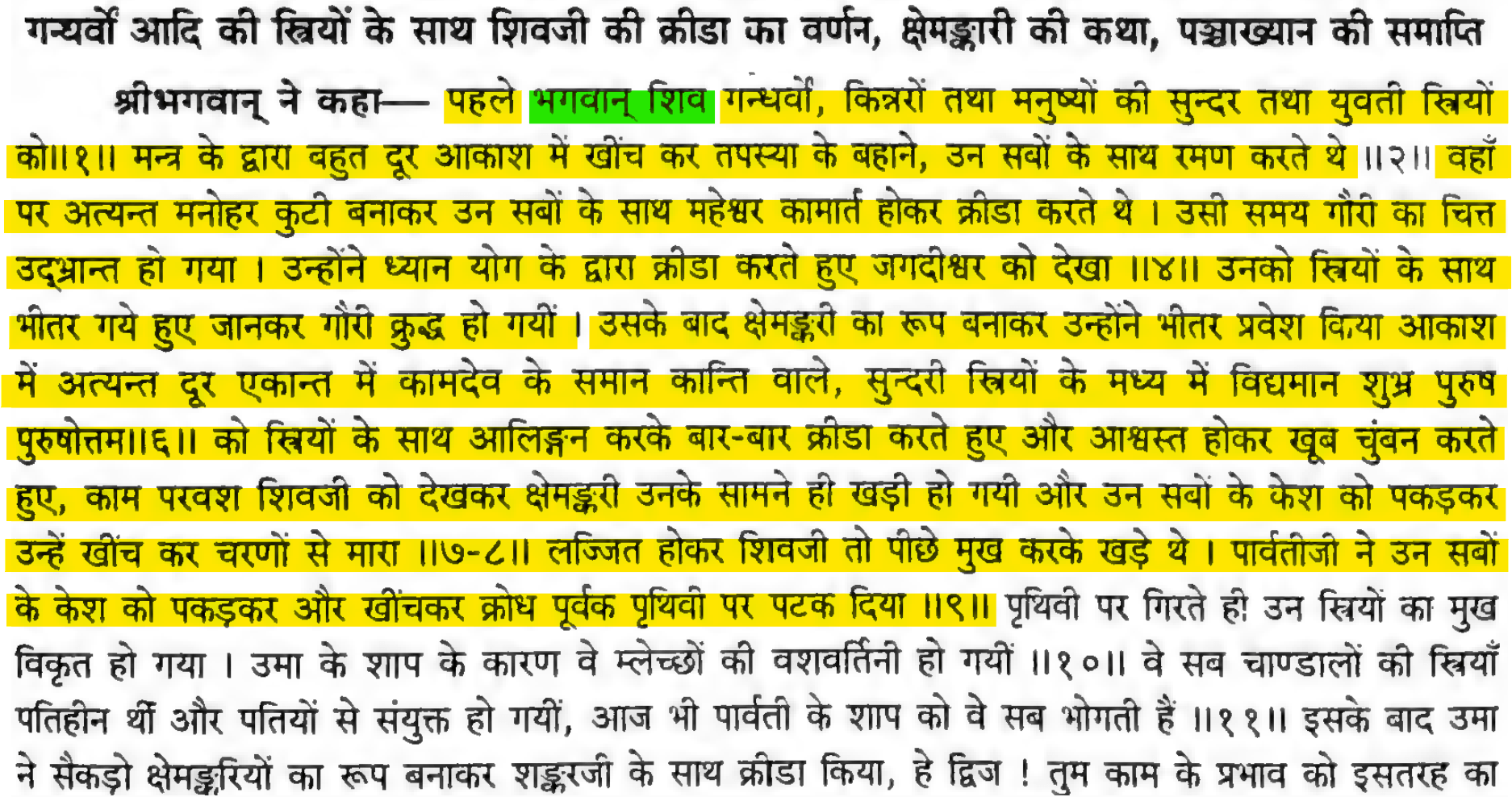
Padma Purana - Page 735
English Translation of passage from Padma Purana page 735
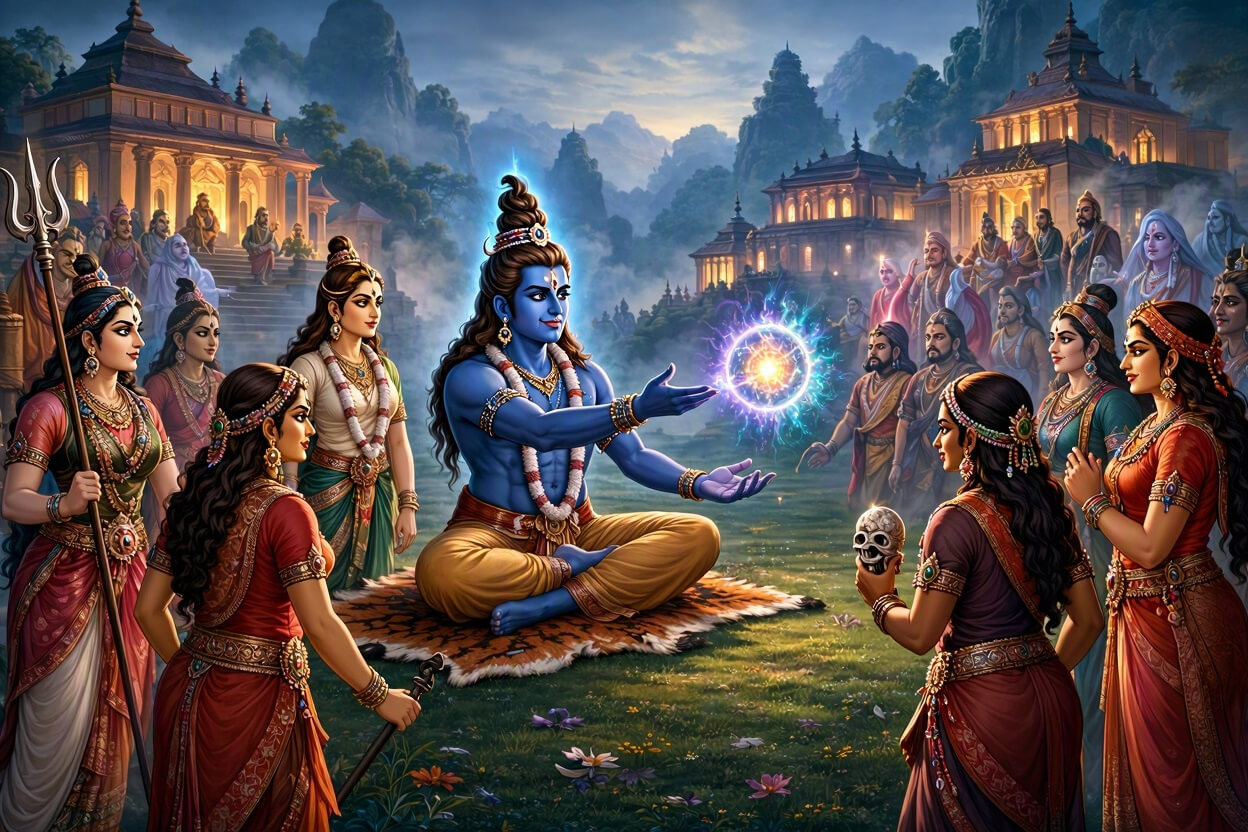
The Lord said:- Previously, Lord Shiva would pull the beautiful, young wives of Gandharvas, Kinnaras, and humans from far away into the sky using mantras, under the pretext of performing penance (Tapasya), and engage in love-play with them. [1-2]
Building a highly enchanting hut there in the sky, Maheshvara (Shiva), entirely overcome by lust (Kamarta), would engage in amorous sports with them. At that time, the mind of Gauri became deeply distressed and agitated. Through her meditative power (Dhyana Yoga), she witnessed the Lord of the Universe actively engaging in these amorous sports. [4]
Realizing that he was deeply intimate with those women, Gauri became furious. She then assumed the form of Kshemankari to enter that place. In the distant, isolated sky, she saw the radiant male figure - possessing a beauty like Kamadeva - surrounded by beautiful women. She saw Shiva, entirely subjugated by lust, repeatedly embracing, sporting with, and passionately kissing these women. Seeing this, Kshemankari stood directly in front of him. She grabbed all those women by their hair, dragged them, and struck them down at his feet. [6-8]
Filled with immense shame, Shiva turned his face away and stood behind her. Parvati, in a fit of rage, grabbed the hair of those women, dragged them, and violently slammed them onto the earth. [9]
As soon as they hit the ground, the faces of those women became completely disfigured. Due to Uma's (Parvati's) curse, they fell under the control of outcasts (Mlechchhas). They became the wives of Chandalas, some without husbands, and some bound to them - even today, they suffer the consequences of Parvati's curse. [10-11]
After this, Uma multiplied herself into hundreds of Kshemankaris and engaged in amorous play with Lord Shankar. O Dvija! In this way, look at the immense power and influence of desire (Kama)...
The Sky Sanctuary: Divine Betrayal, Infidelity, and the Wrath of a Goddess
Inside the sancturay, Lord Shiva, the great ascetic, had abandoned his severe penances. Struck by the inescapable arrows of Kama, the god of desire, he had used ancient, irresistible mantras to draw the young, beautiful wives of the Gandharvas and humans up into his sky sanctuary. Here, far above the moral judgments of the world, he was entirely consumed by love-play, embracing and kissing the women who had been pulled from their earthly lives to serve his sudden infatuation.
Meanwhile, on the peak of Mount Kailash, Gauri sat in deep meditation. But the cosmic balance felt misaligned. A strange, agonizing unrest disturbed her consciousness. Intuiting a breach of cosmic order, she focused her vision through Dhyana Yoga, casting her mind across the multi-layered heavens.
What Gauri saw shattered the peaceful cold of Kailash
She saw her husband - the supreme yogi, the lord of destruction - surrounded by a sea of beautiful women in a hidden sky hut, entirely lost to lust. The betrayal was absolute. The god who demanded absolute purity from the universe had succumbed to the basest of desires.
Rage, hot and unyielding, flooded Gauri’s immortal veins. She did not weep; she transformed.
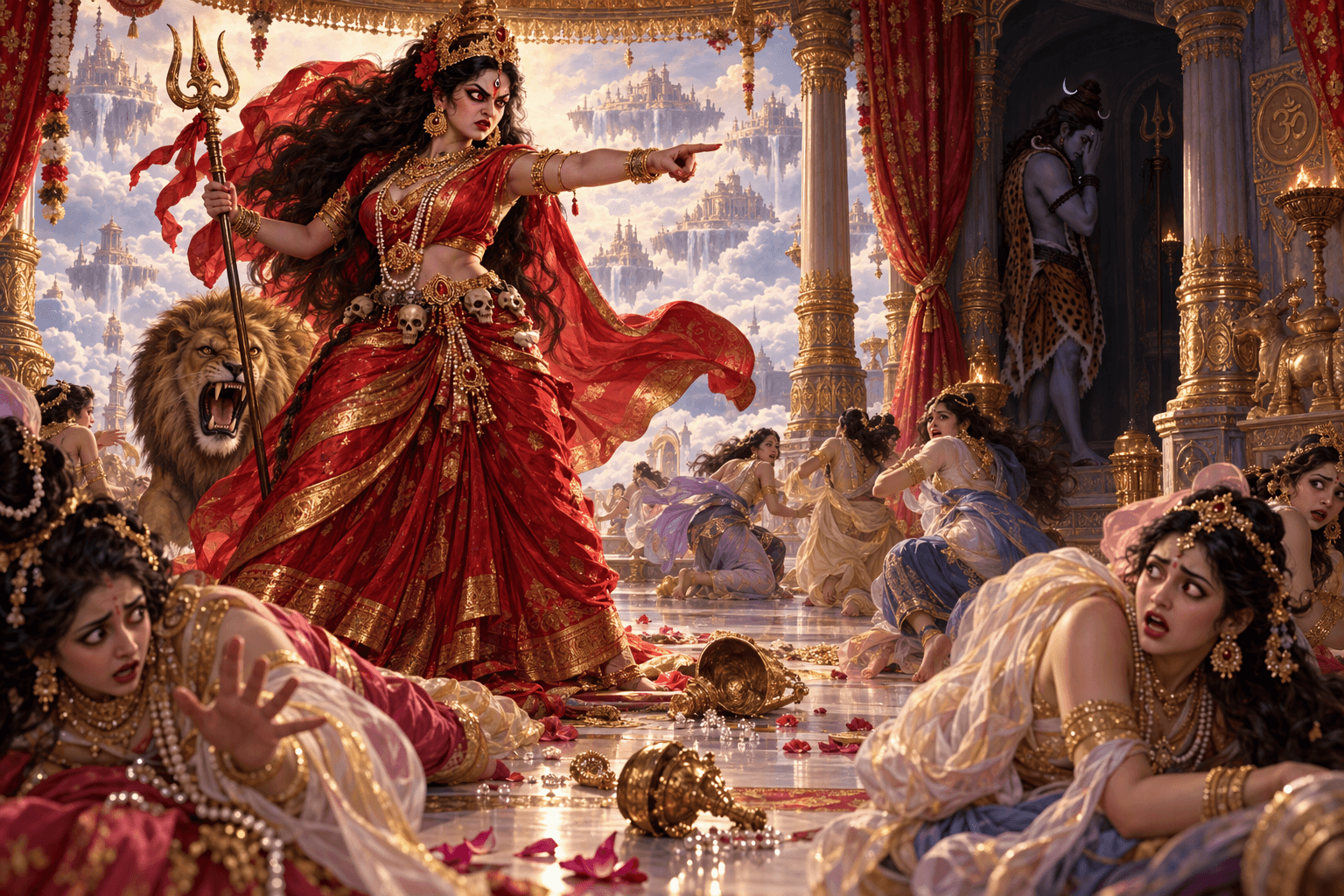
Manifesting a ferocious, terrifying warrior aspect known as Kshemankari, she cut through the dimensions and materialized instantly inside the floating sanctuary. The music stopped. The air turned to ice.
There stood Shiva, radiant as the god of love, locked in the embrace of another man's wife.
When Shiva caught sight of the terrifying form of Kshemankari standing before him, the illusion of his lust shattered instantly. The supreme destroyer was suddenly paralyzed by a completely mortal emotion: absolute, crushing shame. Unable to look his wife in the eye, Shiva turned his face away, stepping backward into the shadows of his own pavilion, offering no defense, no mantras, and no protection to the women around him.
Kshemankari did not spare a single glance for her retreating husband. Her wrath fell entirely upon the sanctuary itself. Moving with terrifying speed, she lunged into the crowd of terrified women. Grabbing them violently by their hair, she dragged them across the floor, throwing them down at Shiva's feet as a testament to his degradation.
"Is this the assembly of the supreme yogi?" her voice thundered, shaking the foundations of the sky.
With a final, wrathful motion, Parvati grabbed the women and violently hurled them out of the celestial pavilion, casting them straight down to the mortal earth below. As they struck the hard ground, the divine beauty that had attracted a god was violently wiped from their features, leaving their faces disfigured and ruined. Bound by the heavy weight of a goddess’s curse, they were cast out of their noble lineages, condemned to a life of misery, serving as a eternal warning of what happens when the desires of gods disrupt the lives of mortals.
Turning back to her husband, the wrath of Kshemankari shifted. If it was a multitude of women he desired, she would show him the true scale of the divine feminine. In a flash of blinding light, she multiplied her form into hundreds of identical Kshemankaris, surrounding the silent, shamed deity—binding him forever to her absolute, inescapable presence.
Conclusion
This striking narrative from the Puranas strips away the idealized, pristine image of divinity to expose a raw, unsettling exploration of power, betrayal, and consequence. By depicting the supreme yogi succumbing to illicit desires and a betrayed goddess unleashing a devastating, transformative wrath, the text serves as a stark reminder that even the heavens are not immune to the destructive force of unbridled lust.