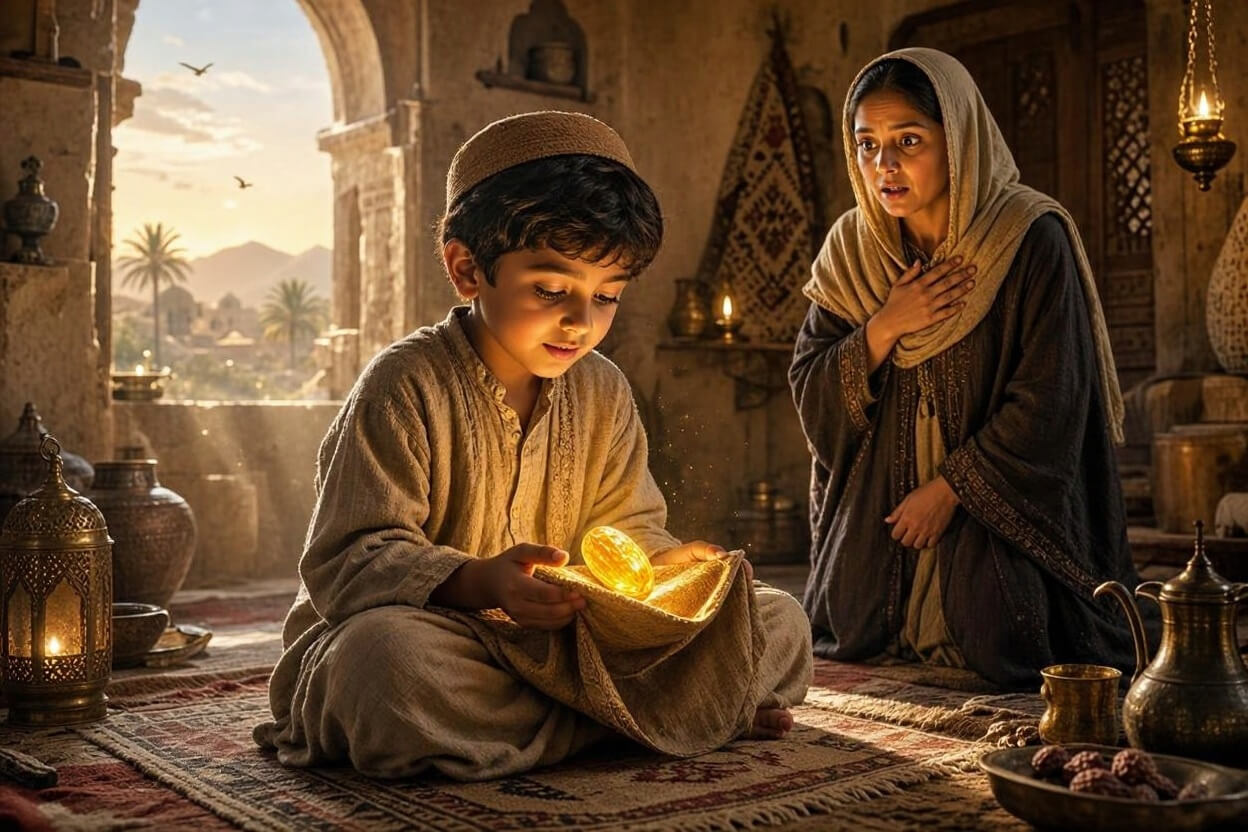
The Story of Emperor Sikandar Lodhi & Kabir Sahib
The Mysterious Illness of Emperor Sikandar Lodhi
At the height of his power, Emperor Sikandar Lodhi of Delhi was struck down by an agonizing, incurable disease. It felt as though his entire body was being consumed by invisible flames. No rash appeared on his skin, yet the excruciating "burning pain" left him completely incapacitated.
Desperate for relief, the Emperor offered an open reward: anyone who could cure his torment could ask for whatever their heart desired.
The response was massive, but every effort failed:
- Eminent royal doctors exhausted their finest medicines to no avail.
- Elite Muslim clerics, Qazis, and Mullahs performed endless prayers and spiritual rituals.
- Renowned Hindu saints and mystics were summoned to cast protective charms.
As his life slipped away, a whisper reached the royal court: In the ancient city of Kashi, there lives a mystic named Kabir. If he shows you mercy, your suffering will vanish instantly.
The Journey to Kashi and the Fatal Mistake
Driven by agony and a flicker of hope, Emperor Sikandar Lodhi left Delhi for Kashi. He traveled with thousands of imperial bodyguards, completely unaware that he was marching toward a moment that would shatter his royal ego forever.
A Meeting with the King of Kashi
Upon arriving in Banaras (Kashi), the desperate Emperor met with the local ruler, King Bir Singh Baghela. Bir Singh was already a devoted disciple of Lord Kabir and knew the mystic's divine capabilities firsthand.
Sikandar Lodhi: "I am completely distraught, Bir Singh. All that is left for me now is to die. Is there truly a saint named Kabir here who can save me?"
King Bir Singh: "You have come to the right place. Your sorrow ends today. Kabir is not just a saint - He is the embodiment of the Supreme Divine. If He shows you mercy, your disease will vanish."
Sikandar demanded that Kabir be summoned to the palace immediately. However, Bir Singh gently warned the Emperor that true spiritual masters do not answer royal summons. If an emperor wished for divine grace, he had to seek it with humility. Humbled by his pain, Sikandar agreed to go to Kabir himself.
The Confrontation at the Ashram
It was evening when the two kings reached the ashram of Swami Ramanand, Lord Kabir’s outer spiritual guru. While waiting outside for Kabir Sahib to arrive, King Bir Singh sent a messenger inside to inform Swami Ramanand of the Emperor's presence.
However, Swami Ramanand held a deep-seated prejudice against Muslims, viewing them as outcasts (mlechha).
Swami Ramanand: "I refuse to look upon the face of these despicable people. Tell the Emperor to sit outside."
Hearing this, Sikandar Lodhi flew into a royal rage. His imperial pride could not tolerate such a blatant insult from an ascetic. Drawing his sword, the Emperor stormed into the ashram and beheaded Swami Ramanand on the spot.
The Weight of Regret
As Sikandar walked away from the bloody scene, the gravity of his actions hit him. He turned to Bir Singh in absolute panic:
- The Ultimate Curse: He realized he had just murdered the guru of the only man who could cure his terminal illness.
- The Despair: He believed Kabir would now curse him, leaving him to suffer a agonizing death.
The Miracles Begin: Curing the Emperor and Raising the Dead
Just as the two kings exited the ashram gates, Lord Kabir appeared, walking calmly down the path. What happened next would redefine the Emperor's understanding of God and humanity.
A Touch of Instant Healing
Seeing the mystic approach, King Bir Singh immediately prostrated himself on the ground. Terrified of divine retribution, the mighty Emperor Sikandar Lodhi also threw himself at Lord Kabir’s feet.
Oochche paatr jal na jaayi, taatey neecha hujae bhai |
Aadheeni ke paas hain Poorn Brahm Dayaal | maan badaai maariye be adbi sir kaal ||
God Kabir walked over, gently placed his hands on the heads of both rulers, and asked why two powerful kings had come to visit a poor weaver. The moment God Kabir’s hand touched the Emperor, the agonizing burning pain vanished entirely.
Overwhelmed with emotion and weeping at God Kabir's feet, Sikandar confessed to his horrific crime.
Sikandar Lodhi: "O Embodiment of Allah! I have committed a heinous crime. Out of anger, I have murdered your Gurudev. I am a wretched sinner!"
Lord Kabir: "Do not worry. I have forgiven you. What happened was meant to happen to break the bonds of ignorance."
Resurrecting Swami Ramanand
God Kabir entered the ashram accompanied by the stunned kings. Swami Ramanand’s severed head and torso lay on the floor, covered by a sheet. Kabir bowed before the body of his guru, touched his feet, and called out to him.
On the second call, a profound miracle occurred: the severed head moved on its own, seamlessly reattached to the torso, and Swami Ramanand opened his eyes, restored to perfect life.
Breaking the Chains of Religious Bias
As Ramanand stood up, half blood and half milk flowed from his old wounds. When he asked Lord Kabir for the spiritual meaning behind this, Lord Kabir explained that it was a physical manifestation of the guru's lingering internal prejudice:
- The Deep Secret: The blood represented his worldly biases; the milk represented his spiritual purity.
- The Core Truth: Kabir reminded him that Hindus, Muslims, Jews, and Christians are all children of the same one God. True spirituality recognizes no division.
kahae Kabir do naam suni, bharam paro mati koy ||1||
Kabir - Ram Raheema ek hai, naam dharaaya doy |
kahae Kabir do naam suni, bharam paro mati koy ||2||
Kabir - Krishna Kareema ek hai, naam dharaaya doy |
kahae Kabir do naam suni, bharam paro mati koy ||3||
Kabir - Kashi Kaaba ek hai, ekae Ram Raheem |
maida ek pakvaan bahu, baithi Kabira jeem ||4||
Kabir - ek vastu ke naam bahu, leejae vastu pahichaan |
naam paksh nahin keejiye, saar tatv le jaan ||5||
Kabir - sab kaahuka leejiye, saancha shabd nihaar |
pakshpaat naa keejiye, kahae Kabir vichaar ||6||
Kabir - Ram Kabira ek hai, dooja kabahoo naa hoy |
antar taati kapat kee, taatae deekhey doy ||7||
Kabir - Ram Kabir ek hai, kahan sunan ko doy |
do kari soyi jaanayi, Satguru milaa naa hoy ||8||
Deeply humbled, Swami Ramanand embraced Emperor Sikandar, shedding his past prejudices and vowing to teach universal love to all mankind.
The Jealousy of Pir Shekhtaqi and the Rivalry at Court
The morning after the miraculous healing of the Emperor and the resurrection of Swami Ramanand, the royal court of Kashi convened in absolute awe. Emperor Sikandar Lodhi of Delhi and King Bir Singh Baghela of Kashi did something unprecedented for monarchs: they prostrated themselves humbly on the floor, placing Kabir Sahib on the royal throne.
The Emperor’s Question
Sikandar Lodhi, still processing his sudden relief from years of agonizing pain, looked up at Lord Kabir with deep reverence.
Sikandar Lodhi: "O Nurturer of all! My fatal illness could not be cured by the greatest Hindu saints, nor by the most elite Muslim Pirs, Qajis, and Mullahs. What is the secret behind your grace? For the first time in years, I have eaten a full meal and stand completely healthy."
Kabir's Divine Revelation: The Power of Allahu Akbar
Kabir Sahib's response fundamentally challenged the religious understanding of everyone present in the court.
Kabir Sahib: "O King! Only the Supreme God Allahu Akbar (Allahu Kabiru) has the power to destroy and forgive sins. Other deities can only give you the fruits of your past deeds—sorrow for sin, and happiness for virtue. Your agony was written in your destiny as a punishment for past sins, and no ordinary deity could erase it.
Neither the Hindu gurus, nor the Muslim Pirs and Mullahs know the true method of worship of the Almighty. Even the grand entities like Shri Ram, Shri Krishna, Brahma, Vishnu, Shiva, or the formless Lord (Brahm) lack this complete knowledge. Neither did Prophet Muhammad know it. Because this slave (God Kabir) alone holds the true spiritual path to the Almighty Allah, your karmic suffering was instantly erased."
The Fury and Jealousy of Pir Shekhtaqi
Listening to these words from the back of the court was Pir Shekhtaqi, the Emperor's supreme religious advisor. He had refused to visit the Hindu ashram the night before out of sheer prejudice, but now his pride was utterly shattered.
Interrupting the court in a sarcastic rage, Shekhtaqi confronted the weaver of Kashi.
Pir Shekhtaqi: "So, only you possess all knowledge? You dare to call our holy Prophet Hazrat Muhammad ignorant?!"
King Bir Singh (Intervening): "Pir Ji, there is no need for anger. Let us resolve this doubt politely. Ask Kabir Ji to explain the spiritual basis of his words so the confusion can be cleared."
The Quran's Hidden Truth and the Identity of Allahu Akbar
The ideological clash at the royal court of Kashi reached a boiling point when Kabir Sahib openly challenged the centuries-old teachings of the royal clergy. Standing before the Emperor and the furious Pir Shekhtaqi, Kabir Sahib unveiled the ultimate spiritual secret hidden deep within the Islamic scriptures.
The Secret Verses of Surat Furqan
Kabir Sahib explained that the very giver of knowledge in the Quran speaks of a higher power other than himself.
Kabir Sahib: "Shekhtaqi ji, look closely at Surat Furqan 25, Verses 52, 58, and 59. The text explicitly commands Prophet Muhammad to praise the Almighty Creator, whose name is Kabir (Allahu Kabiru). It states that this Supreme God created the earth, the sky, and all the universes in six days, and on the seventh day, He sat upon His heavenly throne.
Most importantly, the scripture instructs the Prophet: If you wish to know the true method of worship and the complete nature of this Omnipotent God, you must seek out a Baakhabar (a Tatvdarshi Saint). If even the giver of the Quran directs Muhammad to find a Master who holds this hidden knowledge, how can ordinary Qajis, Mullahs, and Pirs claim to know the path?"
Why Rituals Fail to Stop Suffering
Kabir Sahib then boldly addressed why mainstream religious practices fail to alter a person's destiny or heal their terminal illnesses:
- Incomplete Paths: Mechanical rituals like offering Namaz five times a day, Roza (fasting), and Azaan (the call to prayer) are performed without the true method of worship.
- The Cycle of Karma: Without the specific spiritual guidance of a Baakhabar, a soul cannot achieve absolute salvation. They remain trapped in the grueling cycle of birth, death, and karmic suffering.
- The Afterlife Trap: Instead of breaking free, souls continue to pay for their deeds in hell, as wandering spirits in the Pitar Lok (ancestral realms) of heaven, or bound inside the bodies of animals.
Denial, Doubt, and the Ultimate Manifestation
Furious and trembling with rage, Pir Shekhtaqi immediately pulled out the Holy Quran Sharif. He opened to Surat Furqan 25 and read the verses with his own eyes. The text was undeniable. Kabir’s description was completely accurate.
The Lie of the Royal Priest
Fearing he would lose his immense influence, wealth, and reputation if the court discovered a low-caste weaver understood the Quran better than the royal advisor, Shekhtaqi slammed the holy book shut.
Pir Shekhtaqi: "Such a thing is written nowhere! This infidel is a liar!"
Because formal education was rare at the time, the common people could not read the Arabic texts themselves. Even Emperor Sikandar Lodhi began to waver in suspicion. He knew Kabir possessed miraculous, inexplicable powers, but he doubted whether an uneducated weaver could truly decipher the deep secrets of Islamic scripture.
Sensing the Emperor's doubt, Shekhtaqi pushed further, spitting venomous words at Kabir.
Pir Shekhtaqi: "Are you claiming to be that Baakhabar? Then tell us, what does Allahu Akbar look like? If you claim God has a physical, corporeal form, then who is He? Where does He live?"
"I Am Kabir Allah"
Kabir Sahib stood tall before the court, his voice echoing with absolute divine authority.
Kabir Sahib: "That Kabir Allah whom you call Allahu Akbar—that is me. I reside above in the eternal realm of Satlok. I alone created all the universes.
Long ago, I descended to earth and met Hazrat Muhammad in the form of a Jinda Saint (a holy man in dark attire). I took his dear soul up to see the breathtaking glory of Satlok before returning him to the physical world. I instructed him to narrate my true glory to all his followers and hand down the book 'Kalame Kabir' which I gifted to him. But Muhammad could not fully grasp the ultimate spiritual truth (Tatvgyan), nor did he believe my words."
The Truth About Prophet Muhammad and Meat Consumption
To expose the deep corruption that had seeped into the religious practices of the time, Kabir Sahib addressed a massive contradiction in the actions of the clergy.
Kabir Sahib pointed out that while the modern Muslim society under Shekhtaqi's guidance routinely slaughtered animals and consumed meat, they were acting completely against the conduct of their own prophets.
Kabir Sahib: "The religious practices you perform today are a distortion of the past. Prophet Muhammad never consumed meat, nor did his lakhs of early followers, nor did the one lakh eighty thousand prophets before him. They strictly observed their fasts, gave the Azaan, and offered Namaz, but they never slaughtered cows or shed the blood of innocent living beings. By consuming meat, you are accumulating massive sins that bind you to severe karmic punishment."
Ek laakh assi koon saugandh, jin nahin karad chalaaya ||
Aras kuras par Allah takht hai, Khaalik bin nahin khaali |
Ve paigambar paakh purush the, Sahib ke abdaali ||
Meaning: - Prophet Muhammad is so deeply respected that he has been called an incarnation of the Lord. By the oath of the 180,000 followers who walked with him, they never slaughtered animals such as goats, chickens, or cows - meaning they practised complete non-violence and abstained from eating meat. Holy messengers like Hazrat Muhammad, Hazrat Musa, and Hazrat Isa were righteous souls blessed with the grace of Brahm (Jyoti Niranjan / Kaal). However, above all stands the Supreme God - Allahu Akbar, or Allah Kabir - who resides in the highest realm of the heavens (Satlok), and nothing can escape the sight of that true Master of the Universe.
Shabdae phir jivaee, hansa raakhya maans nahin bhaakhya, aise peer Muhammad bhaai ||
Kabir Sahib: "Once, Prophet Muhammad killed a cow using nothing but the sheer power of his words (Vachan Siddhi) and immediately resurrected the cow back to life in front of everyone. He did not eat a single shred of its meat.
Today, your blind society has completely lost the real context of this event. To commemorate the day the cow was resurrected, you slaughter an innocent animal! If you do not possess the power to revive a life, you have absolutely no right to take it. By labeling this slaughtered meat as 'blessed food,' you are committing a terrible sin, misleading thousands of innocent followers, and guaranteeing a place in hell."
God Kabir said:-
Ult Muhammad mahal pathaaya | guj beeraj ek kalma laaya ||
Roja, bang, namaaj daee re | bismil ki nahin baat kahee re ||
Kabir Sahib: "I myself took Prophet Muhammad’s soul up to the breathtaking realm of Satlok. However, because his earthly desires remained, he chose not to stay there, so I sent him back into his physical body.
Before this, the Angel Jibreel (Gabriel) had taken Muhammad to Kaal Brahm. While Kaal Brahm instructed him to establish Roza (fasting), Azaan (the loud call to prayer), and Namaz (prayers five times a day), he never once ordered the bismil (slaughter) of animals. You have fabricated these violent rituals out of your own ignorance."
The Wrath of the Royal Guru
Hearing his entire religious authority and the century-old customs dismantled so effortlessly, Pir Shekhtaqi erupted in a desperate, defensive fury.
As the supreme religious advisor whose orders were blindly followed by Muslims all over India, Shekhtaqi relied on classic elitism to deflect his humiliation.
Pir Shekhtaqi: "What could an illiterate weaver like you possibly know about the Holy Quran Sharif or our great Prophet? You are a fraud spreading dangerous misconceptions and propagating lies to insult our faith! Let me tell you the sacred speech of the Holy Quran Majeed (Sharif).
Desperate to reclaim his shattered dominance over Emperor Sikandar Lodhi, Shekhtaqi launched into a long, defensive lecture on the Prophet's biography.
You can read the biography of Prophet Muhammad.
Exposing the Contradiction: Formless God vs. the Seventh Heaven
After listening patiently to Shekhtaqi’s lengthy account of the Prophet’s life, Kabir Sahib dismantled the royal advisor's core theology with simple, undeniable logic. He pointed out a glaring contradiction in Shekhtaqi’s own description of the Almighty.
Kabir Sahib: "Sheikh Taqi Pir ji, you just stated that Allah lives in the seventh heaven, yet you also claim He is completely formless. Think about what you are saying. If God resides in a specific place like the seventh heaven, then He must possess a physical form. A truly formless entity cannot be a resident of any realm."
The Tragic Trials of Prophet Muhammad
Kabir Sahib then turned Shekhtaqi’s own historical narrative back onto him. He walked the entire royal court through the immense personal tragedies that plagued Prophet Muhammad, despite his absolute devotion to the worship prescribed in the Quran.
- A Childhood of Loss. Prophet Muhammad lost his father, Abdullah, while still in his mother's womb. His mother passed away when he was six, and his grandfather, Abdul Muttalib, died when he was just eight years old.
- Family Heartbreak. At age 25, he married 40-year-old Khadija, who had already been widowed twice, and together they had three sons and four daughters. Despite his devout prayers, all three of his beloved sons - Qasim, Tayyab, and Tahir - died in front of him.
- A Fearful Revelation. The Angel Jibreel delivered the knowledge of the Quran Sharif and the method of Namaz by throttling and intimidating the Prophet.
- A Painful Final Hour. Even after performing his religious duties wholeheartedly for decades, Prophet Muhammad passed away at the age of 63 after enduring two days of unbearable physical agony.
The Ultimate Question for the Court
Kabir Sahib looked around the silent court and posed a piercing question that struck at the heart of incomplete spiritual practices.
Kabir Sahib: "Please ponder this truth. When the life of the chosen Messenger sent by your Allah was filled with such devastating catastrophes, what protection or relief can ordinary followers expect from the same method of worship? If those rituals could not shield the Prophet himself from severe suffering, they certainly cannot erase the karmic destinies of his followers."
The Purpose of True Worship and Living Proof
Kabir Sahib continued his deep spiritual discourse, addressing the emotional reality of human suffering and the true purpose of devotion. He pointed out that a father who watches all three of his sons die can never know true peace for the rest of his life.
Kabir Sahib: "People worship God so that their families may live in peace and their karmic punishments are averted. Because the knowledge of worship given by your Allah is incomplete, it cannot stop this suffering. That is precisely why Surat Furqan 25 (Verses 52–59) commands you to seek out a Tatvdarshi Saint (Baakhabar) who knows the true method of worship for Kabir Allah, the ultimate forgiver of sins."
Pointing directly to the healed monarch sitting humbly in the court, Kabir Sahib presented undeniable, living proof:
Kabir Sahib: "Shekhtaqi, I myself am that Kabir Allah. I possess the complete method of worship that destroys all sins and grants eternal salvation. Look right in front of you - Emperor Sikandar Lodhi is breathing a sigh of relief today because his agonising karmic disease vanished instantly. Your incomplete rituals could never achieve this."
The Plight of Baba Adam and the Trap of Pitra Lok
To further prove that traditional religious paths fail to bring permanent peace, Kabir Sahib examined the fate of Prophet Adam (Baba Adam), revered as the father of humanity across both Christianity and Islam.
A Life of Grief on Earth and in the Sky
During Prophet Muhammad’s spiritual ascension with Angel Jibreel, he saw Baba Adam in the sky, alternating between bitter weeping and loud laughter.
- Grief on Earth: Even as a noble prophet, Baba Adam suffered immense heartbreak on earth. Driven by hatred, his elder son murdered his younger son and fled, leaving Adam in deep distress for hundreds of years until his noble son Seth was born, followed by Enosh, through whom worship began.
- Unrest in the Afterlife: Even after reaching the heavens through his lifelong devotion, Baba Adam still lacks peace. He weeps uncontrollably whenever he looks down to see his sinful descendants burning in hell, and laughs only when he sees his virtuous offspring enjoying heaven.
The Reality of Pitra Lok (The Ancestral Realm)
Kabir Sahib revealed the true nature of the realm where Prophet Adam, Hazrat Isa (Jesus), Prophet Ibrahim (Abraham), and Prophet Musa (Moses) reside.
- Not True Salvation: The heavenly realm these great prophets reached is actually Pitra Lok - the same ancestral spirit realm described in Hindu scriptures where deceased ancestors reside.
- The Endless Cycle: A soul remains in Pitra Lok only as long as its good deeds last. Once that spiritual merit runs out, the soul is forced back into the painful cycle of rebirth, taking on the lives of ghosts, animals, and birds.
Kabir Sahib: "When even the greatest prophets who practised this worship have not attained complete liberation or lasting peace, what can ordinary followers hope to achieve by copying their incomplete rituals?"
Please read Information About Meeting between God Kabir and Prophet Muhammad From Holy Book Kabir Sagar.
Read Divine Hierarchy in Abrahamic Faiths
The Trap of Kaal Brahm and the Call to True Salvation
Kabir Sahib brought His spiritual revelation to a powerful climax, uncovering the hidden force keeping humanity trapped in endless suffering. He explained that the incomplete religious rituals practiced by Mullahs, Qajis, and Pirs were not designed to liberate souls, but to bind them.
The Identity of the Supreme Creator
Looking directly at the assembly, Kabir Sahib offered a direct path to freedom:
Kabir Sahib: "Only the knowledge given by the Baakhabar (Tatvdarshi Saint) indicated by your Allah can grant complete salvation. Neither Prophet Muhammad nor you Mullahs, Qajis, and Pirs ever attained that true path. Everything you practise today is an illusion laid by Brahm (Kaal / Jyoti Niranjan) so that no worshipper can ever escape his realm.
I am that Baakhabar. Take spiritual instruction from me and share this true knowledge with your followers. The entity you worship is Kaal, whom the Vedas call Brahm or Kshar Purush. The true Supreme God is someone else entirely - He is called KavirDev in the Vedas, Kabira in the Quran Sharif, and Allahu Akbar by Prophet Muhammad. I am that Kabir Allah, and you are all my dear souls."
Kabir Sahib noted how this exact truth had previously infuriated another prominent Muslim leader, who reacted with anger and forbade Kabir from ever attending his sermons again.
Pride Over Truth: Shekhtaqi Walks Out
Watching this intense exchange unfold, Emperor Sikandar Lodhi turned to his royal religious advisor, desperate for verification.
Emperor Sikandar Lodhi: "Pir ji, tell me honestly - is the description narrated by Lord Kabir actually written in the Holy Quran Sharif?"
The Deliberate Deception
Pir Shekhtaqi opened the Holy Quran Sharif and carefully read Surat Furqan 25 (Verses 52 to 59) once again. In his heart, he realized that every single word Kabir Sahib had spoken was completely accurate. Yet, blinded by arrogance and terrified of losing his supreme authority, Shekhtaqi chose pride over truth.
Pir Shekhtaqi: "Kabir is a liar! What could an illiterate weaver possibly know about the profound secrets of the Holy Quran Sharif?"
Refusing to engage any further, Shekhtaqi stood up in a fit of displeasure and stormed out of the court into his private chambers.
The Emperor's Awakening
Left behind in the court, Emperor Sikandar Lodhi reflected quietly on everything he had heard:
- A Faint Recollection: Because the Emperor regularly listened to recitations of the Quran Sharif, he vaguely recalled hearing verses matching Kabir's description.
- The Language Barrier: However, lacking formal knowledge of the Arabic language and deeper spiritual texts, he could not verify the verses independently.
- An Undeniable Truth: What Sikandar did know intimately was the life story of Prophet Muhammad. Overwhelmed by the sheer logic of Kabir’s words, the Emperor sighed deeply and admitted to the court, "Verily, the life of Prophet Muhammad ji has indeed been full of sufferings."
The Emperor's Deepest Questions: Unravelling Creation and the Trap of Kaal
Deeply moved by the revelations in court, Emperor Sikandar Lodhi bowed in reverence and asked Kabir Sahib a series of profound questions about the hidden forces governing the universe.
Emperor Sikandar Lodhi: "O Nurturer-of-all! Who is this power called Brahm (Kaal), and why does he never appear directly in front of everyone?"
In response to these first two questions, Supreme God Kabir narrated the complete Creation of Nature, revealing how the universes were formed and why Kaal remains hidden from human eyes. (For the full story, read our dedicated guide on the Creation of Nature.)
Were Great Prophets Like Baba Adam Caught in the Trap?
The Emperor then asked a third critical question: Were even the greatest spiritual figures, like Baba Adam, caught in Kaal’s illusion?
Kabir Sahib answered by pointing directly to the Book of Genesis in the Holy Bible, uncovering how control of the Earth shifted after creation.
- The Shift in Power. After the Supreme God created human beings and all living creatures in six days, He rested upon His throne. Following this, Brahm (Kaal) seized control of the earthly realm.
- The Hidden Ruler. Because Kaal pledged never to appear physically before everyone, he governs the world indirectly through his three sons (Brahma, Vishnu, and Shiva).
- Voices in the Dark. Kaal also speaks through ethereal voices or enters human bodies like a spirit to issue commands. Similarly, angels, ghosts, and Pitras (deceased ancestors) possess individuals to deliver messages, leaving devotees unaware of who is truly speaking.
The True Dietary Commandment of the Supreme God
Kabir Sahib also clarified a widespread misconception regarding food and animal slaughter by referencing the exact scripture in Genesis:
- For Human Beings. The Supreme God’s first and final dietary command was clear. He provided fruit-bearing trees and seed-bearing plants as food for humanity.
- For Animals. He provided small plants, grass, and shrubs to sustain all other living creatures.
- The Mixed Scriptures. Kabir Sahib revealed that the Complete God never issued any further commandments in the Bible or the Kateb (Taurat, Injil, Zaboor, and Quran Sharif). Instead, these later texts contain a mixture of orders delivered by Brahm, his angels, ancestral spirits, and ghosts.
Did Creation Exist Before Baba Adam?
Seeking to understand the timeline of humanity, the Emperor asked if life existed on Earth before the era of Baba Adam. Kabir Sahib revealed a fascinating historical connection linking ancient Indian history with Abrahamic traditions.
- The Identity of Baba Adam. In the ancient Suryavansh (Solar Dynasty), there ruled a monarch named King Nabhiraj. His son was King Rishabhdev, revered as the founder of Jainism and its first Tirthankar. According to Jain historical texts (Aao Jain Dharm Ko Jaane, page 154), this very same soul of King Rishabhdev later took birth as Baba Adam.
- An Uninhabited World. Creation existed long before Baba Adam, though vast stretches of the Earth were entirely uninhabited. Different populations lived in complete isolation, unaware of others across the globe.
- A Separate Creation. In one such isolated region, Brahm initiated a new human creation. The virtuous soul of Baba Adam descended from the realm of Brahma (the son of Kaal) to live out his past karma.
- The Afterlife of Adam. Because Baba Adam did not receive the true, scripture-based method of worship during his earthly life, he became a Pitra after death and entered Pitra Lok. Furthermore, as the Holy Bible confirms, angels already existed in the cosmos long before Adam was created.
The Final Answers: Mixed Scriptures and Kaal's Fear
Before concluding their profound spiritual dialogue, Emperor Sikandar Lodhi posed two final questions to resolve his lingering doubts about the scriptures.
Why Meat-Eating Appears in Later Texts
- The Emperor's Question: If the Supreme God originally commanded humans not to eat meat, how did instructions permitting animal slaughter end up in the Bible and the Quran?
- Kabir Sahib's Answer: As recorded in the Book of Genesis, the Supreme God created the universe in six days and rested on the seventh. Afterward, the angels of the unmanifested Avyakt Allah (Kaal) and Pitras (ancestral spirits) delivered their own commands to Baba Adam and subsequent prophets. These later spirit-driven decrees were eventually written down alongside original truths inside the Bible and the Quran Sharif.
Why Kaal Mentions the Supreme God
- The Emperor's Question: If the unmanifested God (Kaal) works so hard to hide true spiritual knowledge, why does he still hint at the existence of a Supreme Creator in his scriptures?
- Kabir Sahib's Answer: Out of sheer fear of the Supreme God, Jyoti Niranjan (Kaal) cannot completely conceal the fact that a higher Almighty power exists above him. However, because Kaal himself does not know the true method of worshipping the Supreme God, he simply sings the Almighty's glory while instructing humans in his own incomplete rituals.
The Emperor's Vow and the Royal Journey to Delhi
Deeply moved by these revelations, Emperor Sikandar Lodhi saw a chance to heal his divided empire. He realized that bringing this divine Master to Delhi could unite Hindus and Muslims, end religious bloodshed, and grant salvation to his subjects.
Emperor Sikandar Lodhi: "O Embodiment of Allah! O Nurturer-of-all! Please grace us by coming to Delhi with us once."
Kabir Sahib: "First, take spiritual initiation from me, and only then will I accompany you. Otherwise, I will not go."
The Three Sacred Rules of Initiation
Eager to accept the truth, Sikandar Lodhi agreed to every condition Kabir Sahib set before him:
- No Forced Conversions. The Emperor promised never to force any Hindu to convert to Islam.
- Complete Non-Violence. He vowed never to kill any living creature himself, nor order anyone else to commit slaughter. (When Sikandar admitted he could not control the independent actions of local Mullahs and Qazis, Kabir Sahib instructed that the Emperor simply ensure no royal decree ever ordered bloodshed.)
- Lifelong Devotion. Accepting all the spiritual rules, Emperor Sikandar Lodhi received the first sacred mantra from Satguru Kabir Sahib and pledged to follow these principles for life.
Riding in the Royal Howdah
With the initiation complete, Kabir Sahib departed Kashi alongside the imperial caravan. In a staggering display of humility and reverence, Emperor Sikandar invited Kabir Sahib to sit beside him inside the royal howdah atop his personal elephant - a sacred seat of power strictly reserved for the monarch alone. To Sikandar, the weaver sitting beside him was Allah Himself, the Supreme Healer who had cured his fatal disease and raised Swami Ramanand from the dead.
Shekhtaqi's Dark Plot by the Riverbank
While the Emperor rejoiced, his chief religious advisor, Pir Shekhtaqi, simmered with bitter resentment. News of the Emperor's miraculous recovery and Swami Ramanand's resurrection had shattered Shekhtaqi's peace of mind.
- The Fear of Ruin. Shekhtaqi realized that if the Emperor remained devoted to Kabir, he would lose his royal status, wealth, and absolute religious authority over the empire.
- The Malicious Scheme. Consumed by envy, Shekhtaqi spent the journey plotting a way to publicly humiliate Kabir Sahib and turn the Emperor against him.
As night fell, the massive royal caravan halted along the banks of a river to set up camp and rest until morning. Under the cover of darkness, Shekhtaqi prepared to spring his trap - setting the stage for the miraculous resurrection of Kamaal.
The Ultimatum on the Riverbank
At the riverbank camp, Pir Shekhtaqi paced the grounds with sullen resentment. Noticing his advisor's dark mood, Emperor Sikandar Lodhi asked what was troubling him.
Shekhtaqi pointed toward Kabir Sahib with bitter sarcasm. He demanded to know who this man was and why the Emperor treated him like royalty.
Sikandar Lodhi: "This is God Himself (Allah). First, He healed my fatal illness with a single touch after every doctor and cleric failed. Second, He reattached the severed head of His guru, Swami Ramanand, and brought him back to life right before my eyes."
Pir Shekhtaqi: "These are nothing more than a magician's tricks! If this Kabir is truly Allah, let him bring a dead person back to life in front of me. If he fails, I will march into Delhi and declare to the entire Muslim community that our Emperor has become a kafir (infidel)!"
Terrified that Shekhtaqi would incite a rebellion and overthrow his throne upon reaching the capital, Sikandar Lodhi panicked. Despite sitting right beside the Supreme Master of the universe, the Emperor feared the political wrath of his advisor. He rushed to Kabir Sahib and begged Him to accept Shekhtaqi's challenge to save his kingdom.
Lord Kabir calmly agreed. Kabir knew that Shekhtaqi was blinded by ignorance. However, because millions of Muslims blindly obeyed the royal Pir, Kabir saw an opportunity. If Shekhtaqi witnessed an undeniable miracle and accepted the truth, he could guide countless innocent souls toward true worship and salvation.
The Miracle of the River: Resurrecting Kamaal
At daybreak, Kabir Sahib instructed Shekhtaqi to find a corpse. Soon, the lifeless body of a twelve-year-old boy was spotted floating down the river. Shekhtaqi immediately pointed to the water and demanded that Kabir revive the child.
Before stepping forward, Kabir Sahib turned the tables on the arrogant cleric.
Lord Kabir: "You try first, Shekh ji. Otherwise, you will claim later that you could have performed the exact same miracle."
Encouraged by the surrounding ministers and soldiers, Shekhtaqi stepped up to the water's edge and began loudly chanting incantations. Nothing happened. While Shekhtaqi chanted in vain, the river current carried the boy's corpse three furlongs downstream.
Defeated, Shekhtaqi scoffed and tried to dismiss the challenge. He declared that Kabir was merely stalling to avoid failure, insisting that dead bodies never rise until Doomsday.
Lord Kabir: "Shekh ji, sit down and remain calm."
With a simple gesture of His hand, Kabir Sahib signalled for the corpse to return. To the utter shock of the royal camp, the boy's body reversed direction, gliding upstream against the powerful current until it stopped directly in front of Kabir Sahib. While the river water rushed beneath him, the boy floated completely stationary on the surface.
Lord Kabir: "O Soul, wherever you are, by Kabir's order, enter this dead body and come out!"
Instantly, the lifeless body trembled. The twelve-year-old boy rose from the water, fully alive and healthy, and prostrated himself at Kabir Sahib's feet.
A wave of awe swept through the crowd. Everyone exclaimed that Lord Kabir had performed a wondrous miracle (Kamaal). Kabir Sahib named the boy Kamaal, granted him the sacred initiation mantra, and raised him like His own son.
Arrival in Delhi and a Desperate New Demand
When the imperial caravan finally arrived in Delhi, news of the riverbank resurrection spread across the capital like wildfire. People flocked to see the boy whom Supreme God Kabir had raised from the dead.
Instead of humbling himself, Pir Shekhtaqi grew even more despondent and envious. Seeing Kabir's fame eclipse his own authority, Shekhtaqi decided to raise the stakes to an impossible extreme.
Shekhtaqi's own thirteen-year-old daughter had recently passed away and was already buried deep beneath the earth. Consumed by pride, the Pir issued one final, ruthless ultimatum: if Kabir could dig up his buried daughter and bring her back to life, only then would Shekhtaqi accept Him as Allah.
The Spiritual Mystery: Why Complete Liberation Requires a Complete Saint
Before witnessing the miraculous resurrection of Shekhtaqi's daughter, it is essential to understand the extraordinary spiritual journey of her soul. Why did Supreme God Kabir choose to intervene in her destiny? The answer reveals a profound truth: complete liberation from the cycle of birth and death is impossible without the guidance of a Complete Saint (Tatvdarshi Sant).
The Past Lives of Kamaali
Kamaali was not an ordinary soul. Across four different cosmic eras (Yugas), she had crossed paths with the Supreme Divine, yet remained bound by karma because her spiritual journey was unfinished:
- Satyug (The Golden Age). Kamaali's soul lived as Deepika, the devoted wife of Vidyadhar Pandit. During this lifetime, the couple was blessed to receive Supreme God Kabir Himself, who appeared to them in the form of a divine child.
- Tretayug (The Silver Age). She was reborn as Surya, the wife of Sage Vedvigya (the reincarnated soul of Vidyadhar Pandit). Once again, Supreme God Kabir graced their home in child form.
- Kaliyug (The Dark Age). After passing through various other life forms, the soul took birth in a Muslim family as a devout girl named Rabi (Rabia).
- The Karmic Descent. Driven by the weight of past deeds, her next birth led her into a difficult life as a prostitute, followed by a subsequent rebirth as a girl named Bansuri.
- The Final Birth. Finally, she was born into the household of the royal religious advisor, Pir Shekhtaqi, as his beloved daughter - whom the world would soon come to know as Kamaali.
Scriptural Proof from Sant Garibdas Saheb
This remarkable chain of reincarnations is not merely folklore; it is documented in sacred spiritual literature. Sant Garibdas Saheb recorded the exact timeline of this soul's journey from Rabia to Kamaali in the holy Granth Sahib, offering undeniable scriptural evidence of how divine grace tracks a devotee across lifetimes.
Parakh Ka Ang, Speech no. 56 to 59: -
Garib, Sultaani Makke gaye, Makka nahin mukaam |
gaya raand ke len koon, kahae Adham Sultaan ||56||
Garib, Raabiya parsi rabb syoun, Makke kee asvaar |
teen manjil Makka gaya, bibi ke deedaar ||57||
Garib, phir Raabiya Bansari bani, Makke chadhaaya sheesh |
Poorabley sanskaar kuchh, dhanya Satguru Jagdish ||58||
Garib, Bansari se veshya bani, shabd sunaaya raag |
bahur Kamaali putri, yug yug tyaag bairaag ||59||
Achla Ka Ang, Speech no. 363 to 368: (Granth Saheb composed by Sant Garibdas Saheb)
Garib Raabi kun Satguru miley, deena apna tej |
byaahi ek Sahaab se, bibi chadhi na sej ||363||
Garib, Raabi Makke koon chali, dharya Alah kaa dhyaan |
kutti ek pyaasi khadi, chhutey jaat hain praan ||364||
Garib, kesh upaarey sheesh ke, baati rassi been |
jaakae vastr baandh kar, jal kaadya praveen ||365||
Garib, sunaheen koon paani peeya, utri arsh avaaj |
teen manjil Makka gaya, bibi tumhre kaaj ||366||
Garib, bibi Makke par chadhi, Raabi rang apaar |
ek laakh assi jahaan, dekhe sab sansaar ||367||
Garib, Raabi patra ghaali kar, kiya jahaan asnaan |
ek laakh assi bahey, magar malya Sultaan ||368||
(The story or Rabia has been briefly described in the above verses. You can read the full account on Story of Rabia.)
The Tragedy of Blind Devotion: Bansuri's Sacrifice in Mecca
Following her life as Rabia, the soul took her next birth in a Muslim family as a deeply devout girl named Bansuri. Possessing a pure, religious temperament, she spent her days singing beautiful praises of the Lord and strictly following traditional Islamic practices throughout her life.
However, Bansuri fell victim to a widespread folklore: the belief that anyone who dies in Mecca enters heaven directly.
The Fatal Misunderstanding
When Bansuri grew old, she travelled to Mecca to perform the Hajj pilgrimage. Believing this was her golden opportunity to secure eternal paradise, she made a tragic, extreme decision. Thinking she was offering the ultimate devotion, Bansuri severed her own head as a sacrifice in Mecca.
News of her act spread across the Muslim world, with people praising her devotion and assuming she had gone straight to heaven. Yet, this tragic end exposes a critical spiritual truth about the trap of Kaal (the time-bound lord of the perishable universe):
- The Illusion of Physical Sacrifice. True devotion never requires shedding blood—whether of an innocent animal like a goat, cow, or chicken, or of one's own body. Supreme God abhors all forms of violence and murder.
- The Meaning of True Surrender. Real sacrifice is the complete surrender of one's ego at the feet of the Supreme Divine. It means offering one's heart with pure humility: "O God! My body is yours, my wealth is yours, and this soul is yours."
- The Maze of Kaal. Performing extreme acts that go against true scriptural injunctions cannot grant salvation. Because Bansuri ended her life in ignorance, her devotion could not free her from the cycle of rebirth.
The Karmic Fall and the Supreme Power of Pardon
Instead of ascending to eternal paradise, Bansuri's soul remained bound by the strict laws of karma. In her very next birth, she was reborn into another society and, driven by the weight of her past deeds, was forced into a difficult life as a prostitute.
This dramatic fall from a revered pilgrim to a struggling outcast illustrates why no ordinary deity or ritual can alter a soul's destiny.
- The Presidential Pardon. Consider how a nation's justice system works. Only the highest authority, such as the President, holds the constitutional power to pardon a death sentence; no lower judge or minister can overturn it.
- The Ultimate Authority. In the spiritual realm, Supreme God Kabir (Satpurush) is that highest authority. While other deities can only dispense the exact fruits of good and bad deeds, only Almighty Kabir Sahib possesses the sovereign power to erase karmic sins, rewrite destiny, and permanently end a soul's suffering.
The Fourth Birth and the Grace of the Complete Guru
After completing her difficult lifetime as a prostitute, the soul of Rabia passed away once more. Her fourth human birth took place inside the royal household of Pir Shekhtaqi, the chief religious advisor to Emperor Sikandar Lodhi in Delhi. Tragically, the girl passed away at the tender age of twelve and was buried deep inside a grave.
Why did Supreme God Kabir step in to rescue this specific soul from the grave? The answer lies in a past spiritual merit that never truly fades.
The Divine Promise to a Devotee
In an earlier lifetime, when KavirDev (Supreme God Kabir) had appeared on Earth in the form of a Satguru, this girl had practiced His true method of worship for four to five years before eventually abandoning the path. Because of that brief devotion, she earned three consecutive human births. However, once she died at age twelve, her spiritual credit had completely run out. She was no longer destined for a human body and faced immense suffering across the cycle of 84 lakh (8.4 million) life forms.
Yet, the Supreme Divine never forgets a soul that once sought His refuge:
gael gael laagya rahoon, jab lag dharani aakaash ||
Garib jyon bachha gaoo ki najar mein, yon saai ne sant |
bhakton ke peechhey firey, vo bhakt vatsal Bhagwant ||
Just as a mother cow keeps a constant, loving watch over her newborn calf, the merciful Lord walks alongside His devotees as long as the earth and sky exist. Turning Pir Shekhtaqi's arrogant challenge into an act of supreme grace, Kabir Sahib resurrected the twelve-year-old girl from her grave, took her into His spiritual refuge, named her Kamaali, and granted her the initiation that finally secured her eternal salvation.
Watering the Roots: The Upside-Down Tree of Creation
Through Kamaali's resurrection, Kabir Sahib illustrated a vital lesson for all humanity: spiritual effort only bears fruit when directed toward the Supreme Source. If you want a tree to flourish, you must water its roots - not its leaves and twigs.
To explain the true hierarchy of the universe, Kabir Sahib summarized the entire creation of nature in a single, profound couplet:
Teeno deva shaakha hain, paat roop sansaar ||
Imagine the universe as an upside-down tree suspended from above:
- The Roots Above. The hidden, life-giving root at the very top is Param Akshar Purush (SatPurush / Purna Brahm), the Complete Almighty God.
- The Trunk. The massive trunk extending downward is Akshar Purush (ParBrahm).
- The Thick Main Branch. Growing out from the trunk is a heavy branch representing Jyoti Niranjan (Brahm / Kaal).
- The Three Smaller Branches. Splitting off from Niranjan are three distinct branches: Brahma, Vishnu, and Mahesh (Shiva).
- The Twigs and Leaves. The smaller twigs represent lesser gods and goddesses, while the countless leaves represent the mortal world.
Most people spend their lives worshipping the branches, twigs, and leaves while ignoring the root. By revealing this cosmic structure, Kabir Sahib showed why worshipping lesser deities keeps souls trapped in suffering, whereas connecting directly to the Root - the Supreme God - nourishes the soul with true liberation.
The Public Challenge at the Graveyard
Realising that ordinary tactics would never subdue Kabir Sahib, Pir Shekhtaqi turned to public manipulation. He rallied the local Muslim population in Delhi, warning them that Kabir was a dangerous magician who had bewitched Emperor Sikandar Lodhi. Seeking to corner Kabir once and for all, Shekhtaqi issued an ultimatum: if Kabir could raise his deceased, buried daughter back to life, Shekhtaqi would accept Him as Allah and proclaim His divinity across the entire empire by the beat of drums.
Lord Kabir accepted the challenge immediately. Knowing that all souls are His children - and that Kaal had used the veil of religion to turn brothers into enemies - Kabir saw this as a chance to shatter the blind ignorance of thousands. He instructed Shekhtaqi to spread word of the event far and wide so that no witness could ever harbour a shred of doubt.
A Father's Shocking Celebration
On the appointed day, thousands of onlookers crowded around the graveyard. The grave was excavated, and the lifeless body of Shekhtaqi’s thirteen-year-old daughter was brought out. Before stepping forward, Lord Kabir politely invited Shekhtaqi to try reviving her first. The crowd immediately scoffed at the Pir, pointing out that if Shekhtaqi held any real spiritual power, he would never have let his own child die in the first place.
Turning toward the body, Lord Kabir called out three times: "O Shekhtaqi's daughter, come back to life."
Nothing happened. The girl remained completely still.
Instead of grieving for his unrevived child, Pir Shekhtaqi erupted into a joyful dance. Jumping up and down in triumph, he mocked Kabir in front of the crowd, shouting that the "hypocrite's pretence" had finally been exposed. Kabir Sahib had intentionally delayed the miracle to reveal the true darkness inside the Pir's heart—a heart so consumed by ego and envy that a father celebrated his own daughter remaining dead just to watch a saint fail.
(It is easy to renounce a kingdom or earthly attachments, but it is extraordinarily difficult to abandon pride, prestige, and envy.)
Kamaali Rises and Delivers a Divine Discourse
Calmly asking the dancing Pir to sit down and compose himself, Lord Kabir spoke with supreme, unmistakable authority:
Lord Kabir: "O Soul! Wherever you are, by Kabir’s order, enter this dead body and come out."
Instantly, a visible tremor ran through the corpse. In front of thousands of stunned witnesses, the girl sat up, stepped out of her burial shroud completely alive, and prostrated herself at Kabir Sahib's feet.
A Sermon That Shook Delhi
Filled with divine grace, the resurrected girl stood before the massive gathering and delivered a breathtaking spiritual discourse lasting an hour and a half. She revealed her previous births and urged the crowd to wake up from their spiritual slumber:
- The True Identity of Kabir. She declared that the humble weaver standing before them was no ordinary Dhaanak, but Purna Brahm - the Supreme Creator of infinite universes who had descended in person to cure humanity's chronic disease of birth and death.
- Why Traditional Rituals Fail. Echoing the ultimate truth of Satlok, she explained that neither traditional Hindu practices - such as pilgrimages, reciting the Vedas, Puranas, Gita, or worshipping Brahma, Vishnu, Shiva, and Durga - nor conventional Muslim rituals - like fasting (Roza), offering Namaz five times a day, celebrating Eid, or travelling to Mecca - can free a soul from the trap of Kaal or the cycle of 84 lakh life forms.
- The Only Way Out. Only Bandi Chhor God Kabir holds the true spiritual key to liberate souls from Kaal's web and guide them to Satyalok.
A New Name and a Bitter Defeat
When the discourse ended, Lord Kabir gently told the girl to return home with her father. She refused, declaring that Shekhtaqi was merely a worldly father who had buried her in the dirt, whereas Kabir Sahib - who had given her true life - was her real Father.
Amazed by the miracle (Kamaal), the crowd hailed the event across Delhi. Lord Kabir named her Kamaali, adopted her as His own daughter, and granted her the sacred initiation mantra alongside thousands of inspired onlookers. Watching his spiritual monopoly crumble before his eyes, a defeated Shekhtaqi realised his dominion over the people was slipping away forever.
The Trial by Fire: A Cauldron of Boiling Mustard Oil
Watching Kabir Sahib’s fame soar across Delhi after Kamaali's resurrection, Pir Shekhtaqi refused to surrender his ego. Blinded by pride even with the Supreme Divine standing right before him, Shekhtaqi rallied thousands of followers once more. He declared that Kabir was merely a sorcerer and marched to the royal palace with a brutal demand: throw Kabir into a cauldron of boiling mustard oil. If He survived, they would finally accept Him as God.
Fearing a massive uprising that could topple his throne, Emperor Sikandar Lodhi hurried to Kabir Sahib in deep distress. He apologised profusely for bringing the Master to Delhi only to subject Him to such cruelty. Lord Kabir remained completely serene, telling the Emperor to let them heat the oil so that Shekhtaqi’s stubborn doubts might finally be put to rest.
Sitting Calmly in the Flames
Shekhtaqi stacked thick logs beneath a massive cauldron and stoked the fire until the mustard oil reached a violent, rolling boil. When the Pir ordered his men to seize Kabir and throw Him in, Lord Kabir smiled gently.
Lord Kabir: "Shekh ji, why trouble your men? I will sit inside on my own."
Stepping straight into the bubbling cauldron, Kabir Sahib sat down calmly with only His neck visible above the surface. To the astonishment of the crowd, He rested inside the scorching oil as comfortably as if He were bathing in cool river water.
The Emperor's Painful Mistake
Unwilling to admit defeat, Shekhtaqi immediately shouted to the crowd that Kabir had used magic spells to cool the oil down, making it only appear to boil. Hearing this, a curious Sikandar Lodhi stepped forward to test the temperature himself.
Lord Kabir immediately warned the monarch not to touch the oil, explaining that it was so violently hot his finger would vanish instantly. Ignoring the warning - and assuming that if Kabir was unharmed, he would be safe too - the Emperor dipped his finger into the cauldron.
In a split second, the submerged portion of his finger burned away completely. Overwhelmed by agonising pain, Sikandar Lodhi collapsed to the ground unconscious. Realising the jealous Pir's deception could cost the naive king his life, Lord Kabir stepped out of the boiling cauldron. As the Emperor drifted in and out of consciousness from the shock, Kabir Sahib took hold of his injured hand and instantly restored the severed finger to its original, healthy state.
Weeping with remorse, Sikandar Lodhi begged for forgiveness. Lord Kabir comforted him with boundless compassion, explaining that the Emperor was not to blame - it was simply the illusion of Kaal, who works tirelessly to prevent humanity from recognising their true Creator.
Buried Alive: The Deep Well Conspiracy
When the boiling cauldron failed to leave a single mark on Kabir Sahib, Pir Shekhtaqi’s jealousy turned into pure desperation. Refusing to accept defeat, he rallied his followers once more with a ruthless plan: tie Kabir up, throw Him into a deep well, and bury Him alive under tons of earth and stone.
Shekhtaqi marched to the royal palace to demand one final test. Once again, Emperor Sikandar Lodhi found himself torn between divine truth and political fear. Despite witnessing miracle after miracle, the monarch worried that defying his chief cleric would spark a rebellion and cost him his throne. He hurried to Kabir Sahib in distress to explain Shekhtaqi's latest demand.
Lord Kabir remained completely unbothered, telling the Emperor to let Shekhtaqi do whatever he wished.
Sealed Under 150 Feet of Rubble
In front of thousands of onlookers, Shekhtaqi had Kabir Sahib’s hands and feet bound tightly before throwing Him into a deep, dark well filled with stagnant, dirty water. To ensure there was zero chance of escape, the Pir ordered his men to fill the entire shaft with soil, thorny bushes, dung, bricks, and heavy stones, piling the debris up to 150 feet high.
Satisfied that his rival was permanently silenced, Shekhtaqi washed his hands and face and strode triumphantly into the royal court.
Pir Shekhtaqi: "Emperor! I have finished your lion off today. We poured so much soil and brick over him that he can never come out."
Emperor Sikandar Lodhi: "Pir ji, who are you talking about?"
Pir Shekhtaqi: "Your Gurudev, Kabir! We have ended him for good."
Emperor Sikandar Lodhi: "Pir ji, Revered Lord Kabir is sitting right inside the royal chamber. He hasn't gone anywhere."
Stunned, Shekhtaqi burst into the inner room - only to find Kabir Sahib sitting calmly and comfortably on a royal seat, completely unharmed and without a speck of dust on His clothes.
Blinded by Ego
Witnessing this impossible miracle opened the eyes of thousands of wise onlookers across Delhi, who immediately surrendered their doubts and took initiation from Kabir Sahib. Yet, blinded by arrogance and envy, Pir Shekhtaqi refused to bow down.
Instead of falling at the feet of Bandi Chhor God Kabir to seek forgiveness and salvation, Shekhtaqi let his ego turn him into a bitter enemy of the Supreme Divine. After inflicting several more atrocities that all ended in failure, Kabir Sahib peacefully departed Delhi and returned to His home in Kashi.
The Midnight Ambush in Kashi: Forgiveness Over Vengeance
Even after Kabir Sahib returned peacefully to Kashi, Pir Shekhtaqi’s obsession refused to die. Frustrated that boiling oil and 150 feet of rubble could not harm the mystic, the Pir resorted to common murder. Under the cover of darkness, Shekhtaqi crept up to Kabir Sahib’s humble hut in Kashi accompanied by a band of hired assassins.
Finding Kabir Sahib asleep inside, Shekhtaqi whispered a ruthless order to his men: "Cut Him into pieces."
A Gracious Invitation in the Dark
The assassins rushed in with drawn swords, struck Kabir Sahib repeatedly, and slipped back out into the night, confident that they had finally ended His life.
Just as Shekhtaqi and his men stepped outside the hut, a calm, warm voice called out behind them in the dark:
Lord Kabir: "Pir ji! Stay and drink some warm milk before you go. You should not leave a host's home like this."
Frozen in absolute terror, Shekhtaqi and his hired thugs looked back to see Kabir Sahib standing completely whole and unharmed at the doorway. Mistaking the Supreme Lord for a vengeful spirit, they panicked and fled into the night.
Healing the Assassins
The shock of the encounter took an immediate physical toll on the hired men. All of the assassins fell violently ill with a burning fever that refused to subside for several days.
Rather than punishing the men who had tried to murder Him, Kabir Sahib visited their homes in compassion. He cured their fevers instantly and gently warned them: "This Pir is misleading you and will only get you killed."
Humbled by His boundless mercy, the assassins fell at Kabir Sahib’s feet and begged for His forgiveness - bringing an end to one of history’s greatest clashes between blind religious pride and supreme divine grace.