Birth of Brahma Vishnu & Shiv | Shiv Puran
Shiv Puran - Gita Press Gorakhpur
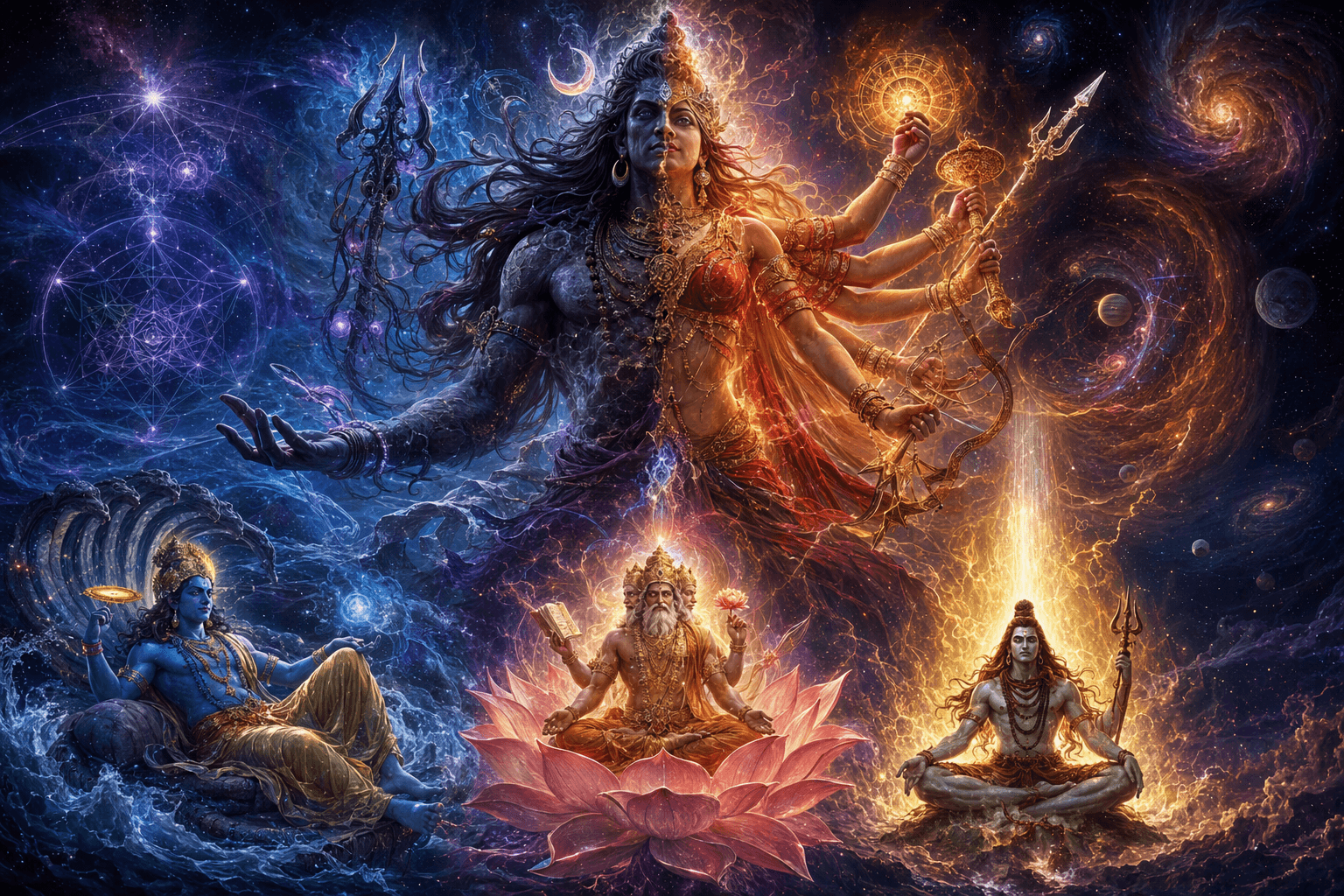
- Shiv puran describes the birth of Brahma, Vishnu and Shiv from Kaal.
- Brahma Vishnu and Shiva are in birth and death. These are not immortal.
Birth of Brahma Vishnu & Shiv | Video Representation
If you prefer visual learning, watch this detailed scriptural breakdown explaining the origin of the Trinity according to the Shiva Purana:
Comprehensive Evidence from Sankshipt Shiv Puran (Gita Press Gorakhpur)
The text below outlines the exact scriptural proof and theological context presented in the Sankshipt Shiv Puran (Sachitra, Mota Type, Hindi edition). This foundational text was edited by Hanuman Prasad Poddar and published by the authoritative Gita Press, Gorakhpur (with the Govind Bhawan Karyalaya, Kolkata institution).
Rudra Samhita — Chapter 6 (Page 99): The Narrative of Cosmic Origin
In this pivotal chapter, Sage Narada approaches his father, Lord Brahma (the Dev-Shiromani), with a fundamental inquiry concerning the creation of the cosmos. Narada asks a question that many spiritual seekers still ask today: Who is the ultimate creator of this universe? Did you create it, or was it Lord Vishnu, or Lord Shiva?
In response, Lord Brahma provides a profound explanation of the Anamaya Shivattva (the unblemished nature of Shiva) and details the chronological timeline of cosmic creation:
- The Primal State of Darkness: Brahma explains that before the universe existed, there was total, unmanifested darkness. There were no elements, planets, or physical forms. The only entity in existence was the formless, supreme reality known as Tat-Brahm (the true, unmanifested God or True Sahib).
- The Manifestation of Sadasiva: After some time, this formless Sat-Brahm desired a second entity; a cosmic intent arose to expand from "one into many." To perform his divine plays (Leela), the formless Supreme Ruler manifested a physical, structured form out of his own sovereign will. This visible manifestation is Lord Sadasiva, whom ancient and modern scholars alike refer to as Ishwara or Kaal-Rupi Brahm.
- The Creation of Goddess Durga (Prakriti): Operating alone in the primordial void, Sadasiva manifested a supreme feminine energy directly from his own divine body (Vigraha). This eternal goddess is intrinsically bound to him and is known by names including Durga, Ambika, Param-Prakriti, Gunavati Maya, and the intellect-bearing mother of the cosmos. She is explicitly designated as the Tridev Janani (the biological Mother of the Trinity) and is traditionally depicted with eight arms (Ashtabhuja).
- The Eternal Abode of Kashi: Together, the primal couple (the Priya and Priyatam) established a blissful, permanent realm called the Shivaloka, structurally known as Kashi or the Avimukta Kshetra. Because this sacred forest of bliss is never destroyed—even during the absolute cosmic dissolution (Pralaya)—scholars recognize it as an immortal, unshakeable space.
- The Birth of Lord Vishnu: While residing in Kashi, Sadasiva and Durga desired to create another entity to bear the immense burden of operating and managing the universe. Sadasiva rubbed nectar (Amrit) onto the tenth part of his left limb. From that touch emerged Lord Vishnu, the most beautiful, serene, and peaceful soul across the three worlds. Sadasiva named him Vishnu because of his inherently all-pervading, widespread nature.
- The Birth of Lord Brahma: Following the creation of Vishnu, the benevolent Lord Sadasiva performed a similar act. He manifested Lord Brahma directly from his right limb. Sadasiva then used his illusory energy (Maya) to gently place Brahma onto a celestial lotus bud originating from Lord Vishnu's navel, which is where Brahma ultimately woke to consciousness.
Rudra Samhita — Chapter 9 (Page 110): The Pillars of Light & Cosmic Duties
As time progressed, a severe dispute arose between Lord Brahma and Lord Vishnu regarding who among them was the supreme controller of the universe. To shatter their mutual delusion and settle the conflict, Sadasiva manifested a massive, infinite pillar of pure light—the Tejamaya Stambha—between them.
Unable to find the top or the bottom of this infinite pillar, both deities humbled themselves. Sadasiva then manifested from the column of light to deliver a vital truth:
- He declared that both Brahma and Vishnu were directly generated from his own primal essence.
- He revealed that a third primary deity, Rudra (Shiva), would soon manifest from him to complete the divine triad.
- Sadasiva commanded them to put aside their differences and begin the joint work of creation, preservation, and destruction.
The chapter explicitly concludes by stating that while Brahma, Vishnu, and Rudra are divine masters who personify the three fundamental qualities of nature (Gunas), the ultimate source, architect, and cosmic controller backing them all is Kaal (Sadasiva).
Conclusion
When analyzed deeply through the authoritative publications of the Gita Press Gorakhpur, the Shiva Purana provides clear, undeniable scriptural evidence regarding the hierarchy of the cosmos. The traditional Hindu Trinity—Brahma, Vishnu, and Shiva—are not self-existent, immortal, or unborn supreme powers. Instead, they are highly exalted administrative deities bound to the cosmic cycles of birth and death, brought into existence by the grand primordial union of Kaal (Sadasiva) and Goddess Durga (Prakriti).
Shiv Purana The Secret of Om AUM ॐ Mantra | Shiv Purana
Categories: purana | Tags: Shiv Puran,