The Story of King Ambarisha and Sage Durvasa: A Lesson in Devotion and Ego
The ancient Vedic texts are filled with timeless narratives that serve as moral compasses for humanity. Among these, the legendary conflict between King Ambarisha and Sage Durvasa from the Srimad Bhagavatam stands out as a profound lesson on the power of pure devotion, the danger of spiritual ego, and the limits of material power.
Beyond a simple tale of right and wrong, this scriptural account contains an eye-opening spiritual truth: it explicitly reveals the structural hierarchy of the cosmos, showing that even the highest universal administrators are mortal entities trapped inside Kaal Lok - the domain controlled by Kaal Brahm.
1. King Ambarisha’s Sacred Vow and the Dwadashi Dilemma
King Ambarisha was a powerful and just monarch who ruled the earth with absolute righteousness. Despite his immense wealth and royal status, his heart belonged entirely to the path of true devotion. He strictly observed the rigorous Ekadashi fast, completely abstaining from food and water to cleanse his mind and spirit.
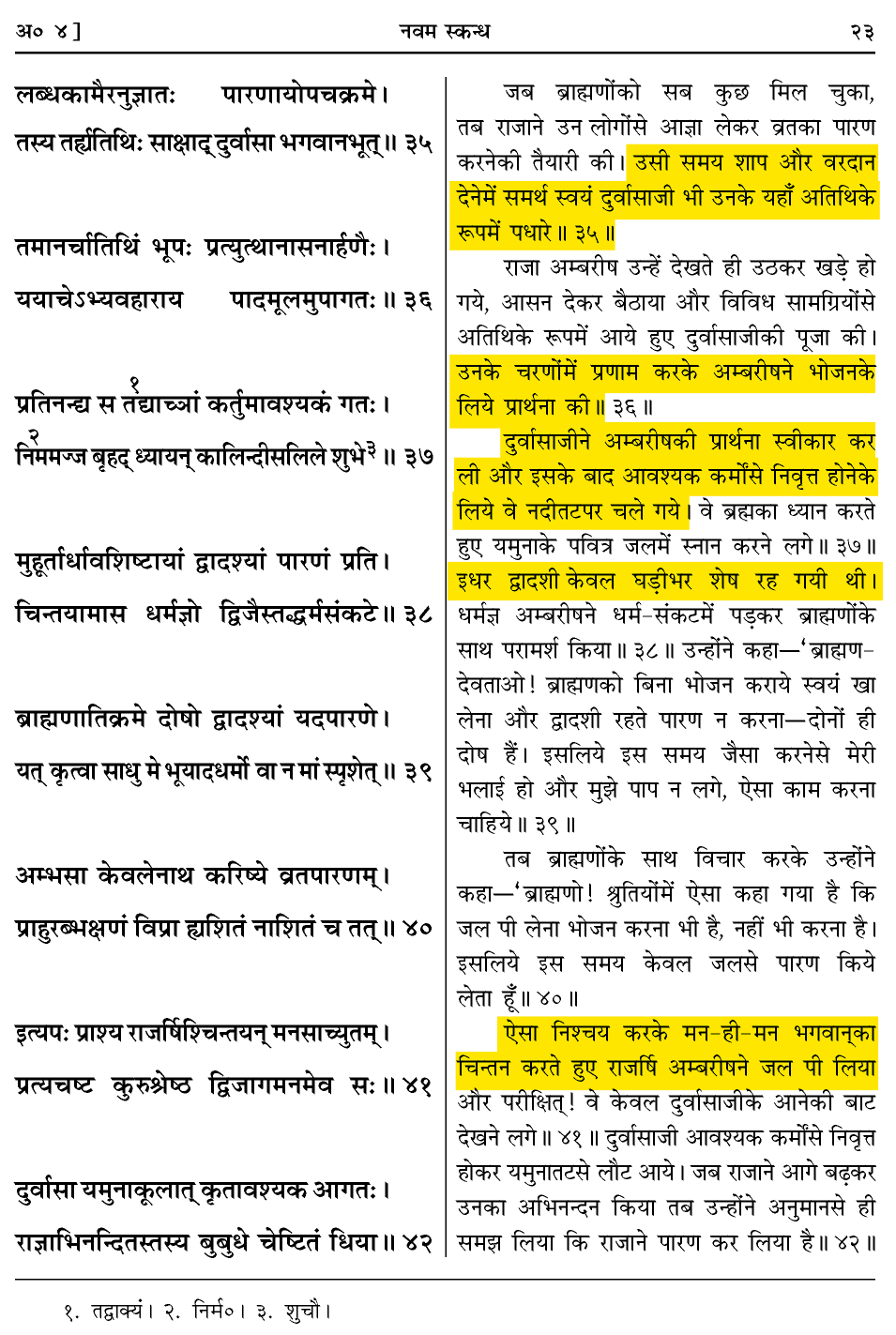
To successfully complete the ritual, tradition dictated that he had to break his fast the following morning (Dwadashi) within a highly specific, narrow auspicious time window.
Just as King Ambarisha prepared to break his fast, the legendary ascetic Sage Durvasa arrived at the palace. Known across the cosmos for his unmatched mystic powers and his dangerously short fuse, Durvasa was welcomed warmly. The king invited him to join the feast. The sage accepted but requested time to perform his mandatory ritual cleansing in the nearby Yamuna River first.
2. A Crucial Decision and the Unintentional Offence
Durvasa’s rituals took far longer than anticipated. As the clock ticked down, the auspicious Dwadashi window began to close. Ambarisha was trapped in a severe spiritual and ethical dilemma:
- If he ate before his guest returned, it would be a massive insult to the sage, breaking the sacred laws of hospitality.
- If he missed the auspicious window, his entire year-long vow would be spiritually ruined.
Seeking a solution, the king consulted his royal priests. They suggested a clever middle ground: take a single sip of water containing a sacred Tulsi leaf. In Vedic tradition, drinking water is simultaneously considered breaking a fast without fully consuming a meal.
Ambarisha took the sip, successfully keeping his vow intact while technically waiting to feast with his guest.
3. The Fiery Wrath of Sage Durvasa
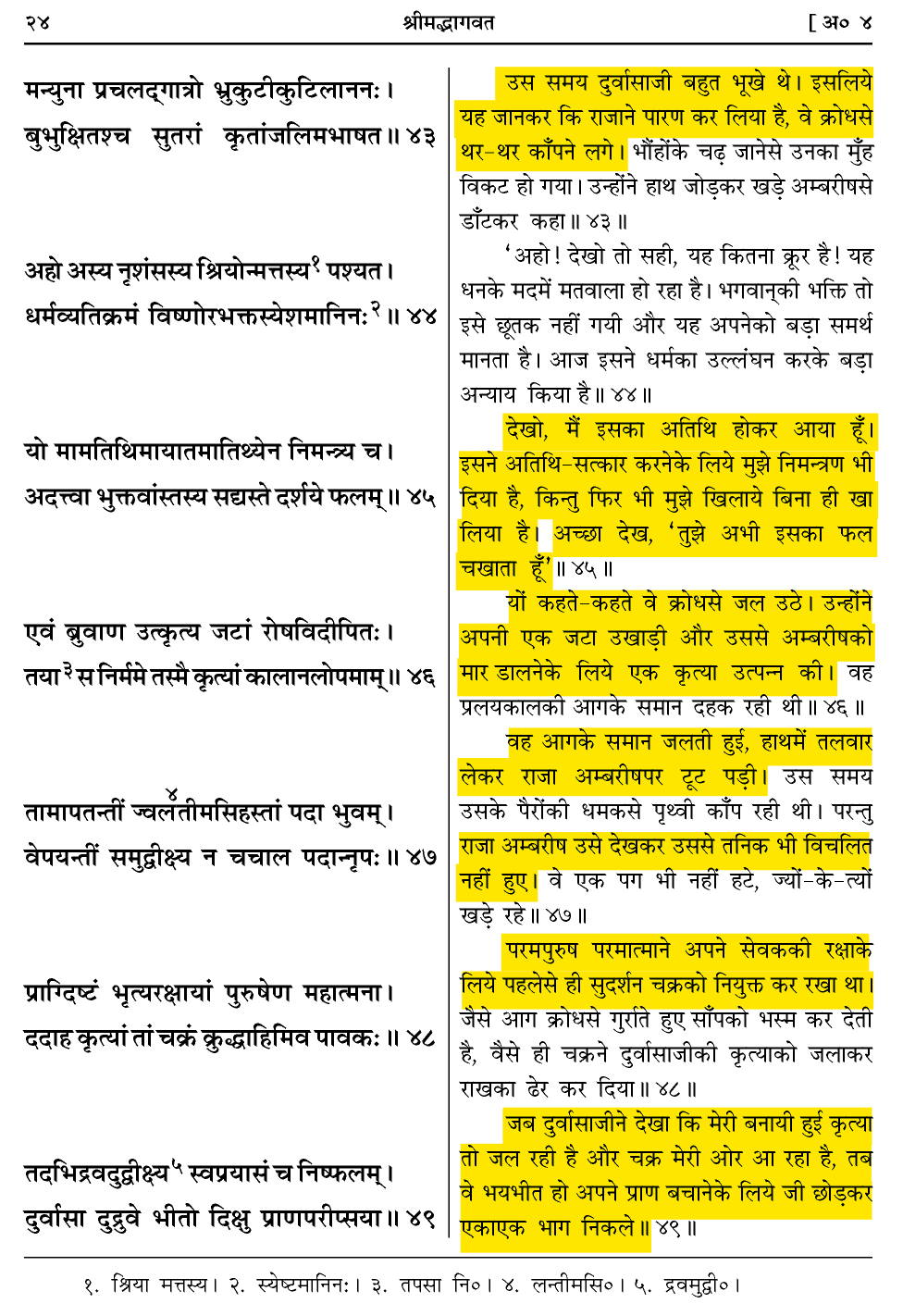
When Durvasa finally returned from the river, his immense mystic vision instantly revealed what the king had done. Blinded by fury and viewing the sip of water as blatant disrespect, the hot-tempered sage refused to listen to explanations.
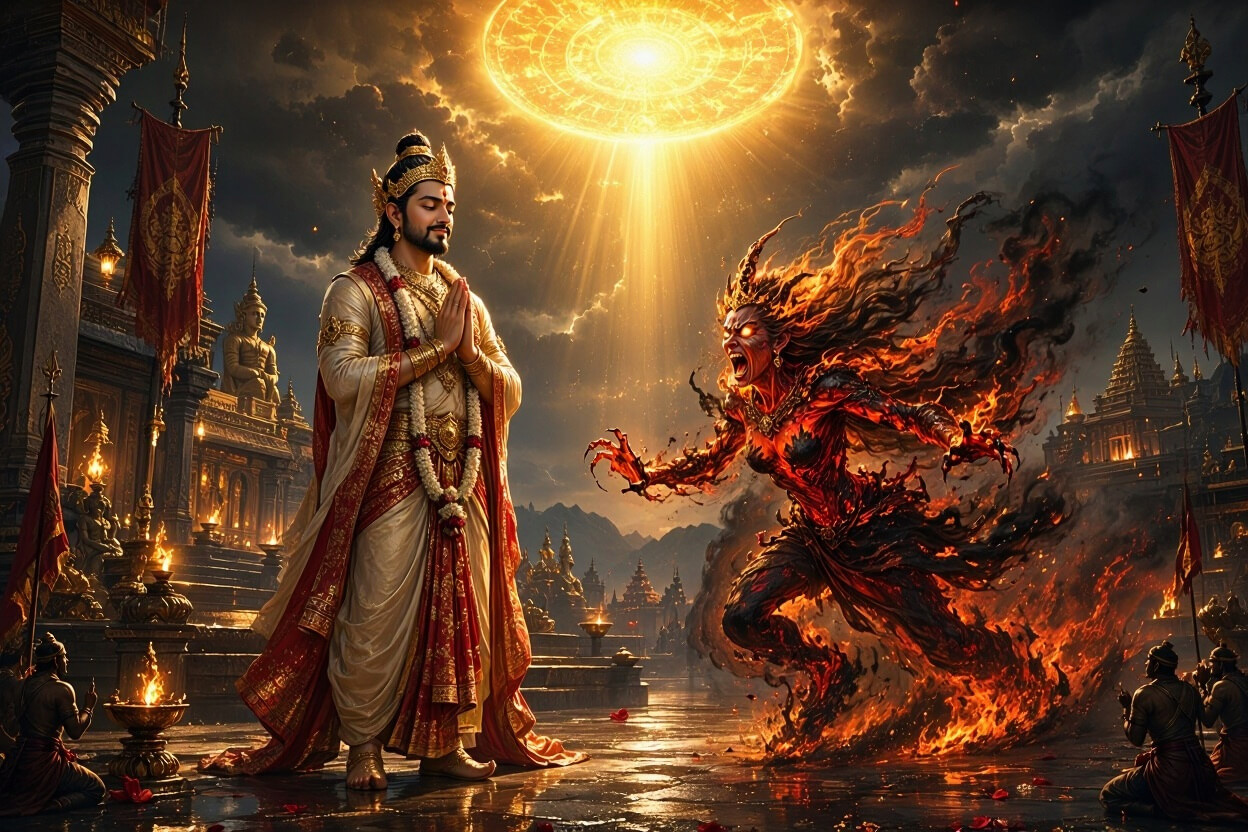
In a fit of rage, Durvasa plucked a strand of hair from his head and infused it with his ascetic power, summoning a terrifying, fiery demoness named Kritya to assassinate the king.
While the monstrous entity charged toward him, Ambarisha did not panic. He did not draw a weapon or attempt to flee. Instead, he simply folded his hands, bowed his head, and surrendered his life to the supreme protection of the Almighty Lord.
4. The Cosmic Reality Revealed: Brahma and Shiva Admit Their Helplessness
The Supreme Lord, fiercely protective of his pure devotees, immediately intervened. From the heavens, the blazing Sudarshana Chakra was dispatched. In an instant, the wheel of light incinerated the demoness Kritya and turned its terrifying, fiery gaze toward Sage Durvasa.
Terrified for his life, Durvasa fled across galaxies, seeking shelter from the highest deities in the universe. It is during this desperate flight that the Srimad Bhagavatam delivers its most critical revelation: the ultimate mortality and helplessness of the gods ruling within the 21 brahmands of Kaal Brahm.
Lord Brahma’s Helplessness on Mount Sumeru
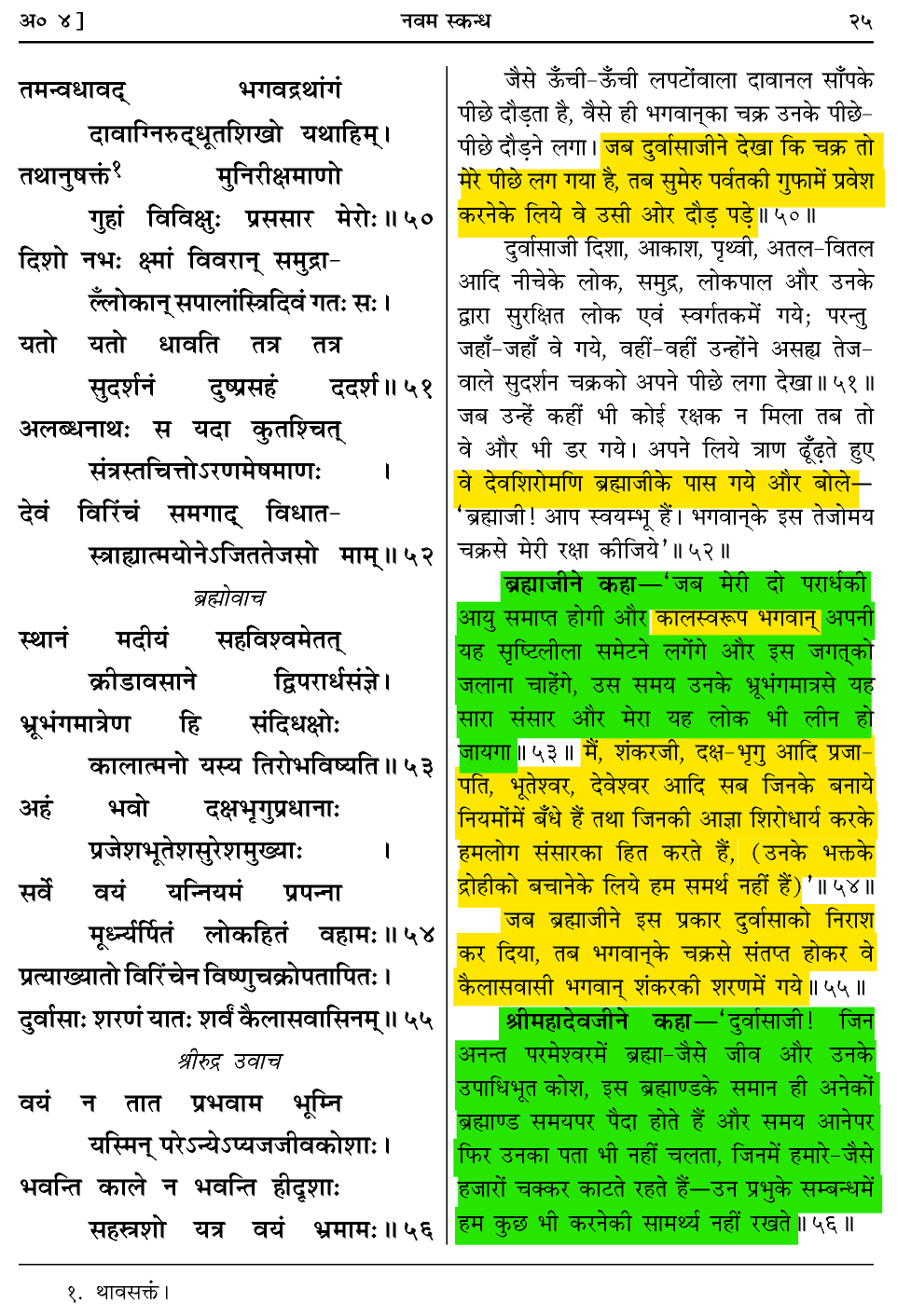
Durvasa fled toward the cave of Mount Sumeru and begged the creator deity, Lord Brahma, for protection. Brahma openly admitted his utter helplessness and his own finite nature.
Brahma explained that when his designated lifespan concludes (read our in-depth calculation on Lord Brahma's age and cosmic lifespan), the terrifying law of Kaal Brahm (Kalasvarupa) compels the winding down of this entire creation. At that moment, by a mere flicker of the Supreme's eyebrows, the entire material universe—including Brahma's own exalted celestial realm (Brahmaloka)—will be completely incinerated and dissolved. Brahma confessed that he, along with great sages like Daksha and Bhrigu, are merely subordinate administrators bound by these laws and possess absolutely no power to protect anyone from the Chakra.
Lord Shiva’s Declaration of Finite Power
Turned away by the creator, a burning and panicked Durvasa fled to Mount Kailash to seek refuge under Lord Shiva. However, Shiva’s response echoed Brahma's vulnerability exactly.
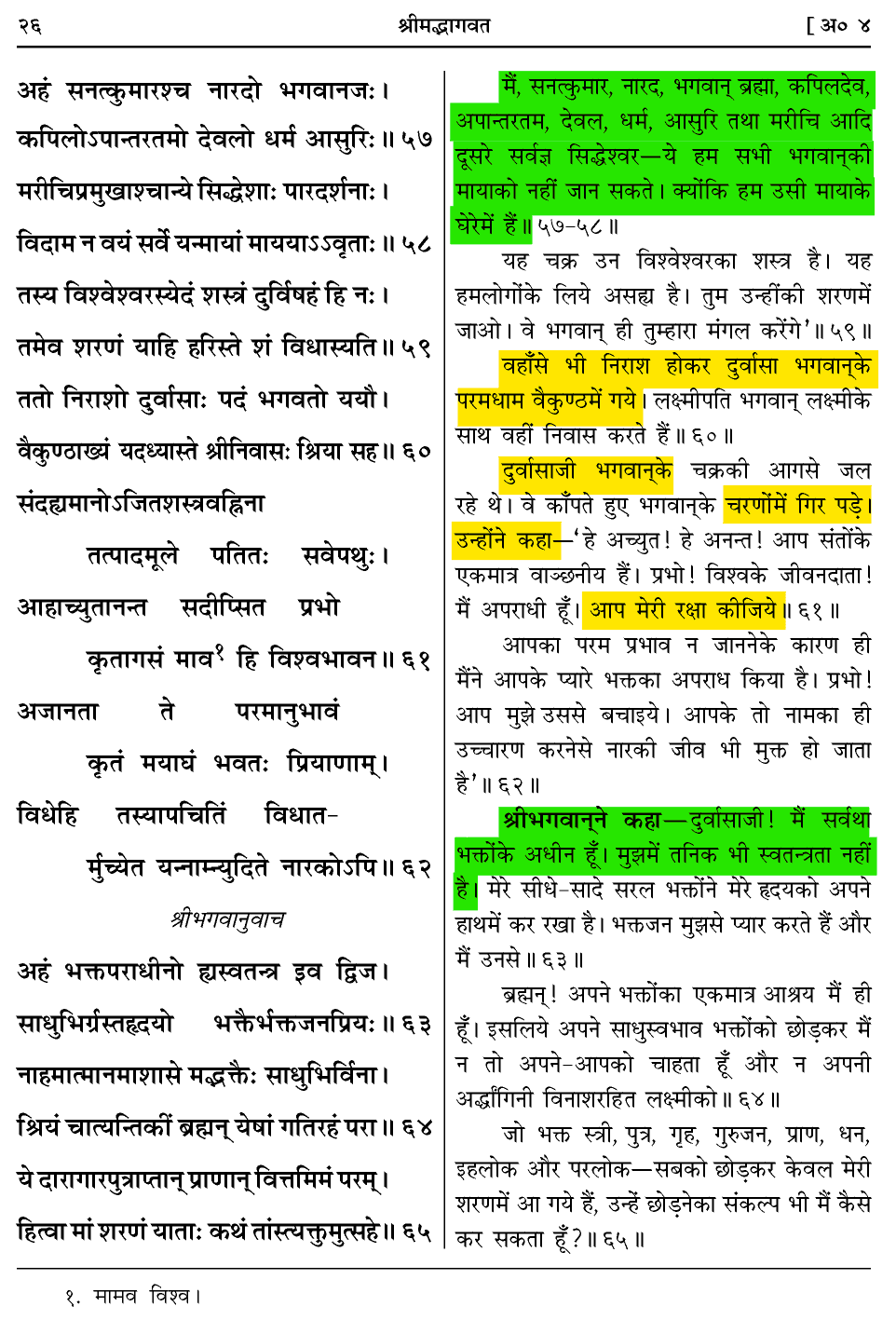
Shiva directly stated that he, Sanat-kumara, Narada, Kapila, and all other fully realized mystic masters are completely enveloped by the illusory energy (Maya) of Kaal Brahm's material world. Shiva revealed a striking cosmic truth: thousands of entities like himself continuously revolve within the vast, perishable mechanics of these 21 universes. Shiva admitted that they are entirely powerless to act against the Chakra or protect someone who has committed an offense against a true soul.
5. Why the Supreme Lord Defends the Humble
After a grueling year of running across galaxies with the blazing weapon right on his heels, a desperate Durvasa reached the cosmic ocean and threw himself down, begging for mercy.
It was here that the famous discourse on devotion was delivered:
"I am completely under the control of My devotees. Indeed, I am not at all independent... Because My devotees have completely given up their worldly attachments just to surrender unto Me, how can I leave them?"
The sage was explicitly told that an offense had been committed against a pure soul. The Sudarshana Chakra would only relent if Durvasa went back to earth and begged King Ambarisha for forgiveness.
6. The Ultimate Triumph of Humility
Durvasa returned to earth and fell prostrate at the feet of the king. To his utter shock, King Ambarisha had stood in the exact same spot for the entire year without eating or drinking, waiting anxiously for his guest's safe return.
Embarrassed that a great sage was bowing to him, the humble king immediately pulled Durvasa up. Instead of gloating, Ambarisha prayed fervently to the Sudarshana Chakra, praising its glory and begging it to spare the sage. Satisfied by the king’s complete lack of malice and profound humility, the cosmic weapon finally relented and returned to the heavens.
Key Takeaways: What This Story Teaches Us Today
- The Illusion of Perishable Realms: The text explicitly reminds us that even the grandest cosmic positions - like those of Brahma and Shiva - along with their entire celestial realms, are temporary, finite, and located within the perishable 21 brahmands of Kaal Brahm. ( Learn about Lord Vishnu's cosmic timeline and age)
- Ego Blinds Wisdom: Sage Durvasa possessed immense spiritual power acquired through years of severe penance (tapas), yet his fragile ego and temper completely blinded his judgment.
- The Power of Absolute Surrender: King Ambarisha’s strength did not come from material weapons or mystic pride, but from his unshakeable faith and peaceful surrender, which commanded the protection of the Lord and the respect of the entire universe.
Hindi Text from Shrimad Bhagvatam Skand 9
Key passages
Part 1: Lord Brahma's Declaration (Verses 53–54)
When Sage Durvasa flees to the highest material planet (Satyaloka), Lord Brahma tells him:
Brahma ji said—'When my lifespan of two parardhas comes to an end, and the Lord in the form of Kaal (Kaalswaroop Bhagwan) begins to wind up this creation-play and wishes to incinerate this world, at that time, by a mere flicker of His eyebrows, this entire world and my own realm (Satyaloka) as well will be completely dissolved and merged.'
I (Brahma), Shankar ji (Shiva), Daksha-Bhrigu and other Prajapatis (creators of living beings), Bhuteshwar (lords of living entities), Deveshwar (chiefs of the demigods)—all of us are bound by the rules and laws created by Him, and we do good to the world by holding His commands upon our heads as supreme. (Therefore, we have absolutely no power or capability to save someone who has turned into an enemy or tormentor of His devotee.)
Part 2: Lord Shiva's Declaration (Verse 56)
When a panicked Durvasa runs to Mount Kailash, Lord Shiva reiterates this exact truth:
Shri Mahadev ji (Lord Shiva) said—'Durvasa ji! In that infinite Supreme Lord, living beings like Brahma and their material coverings (bodies/sheaths), along with millions of other brahmands (universes) just like this one, are created at the designated time, and when the time comes, they disappear without a trace. In those universes, thousands of entities like us continuously keep rotating (revolving in the cycle of birth and death)—in relation to that Supreme Lord, we possess absolutely no power to do anything.
I (Shiva), Sanatkumara, Narada, Lord Brahma, Kapiladeva, Apāntaratama, Devala, Dharma, Asuri, Marichi, and other all-knowing masters of mystic perfection (Siddheshwaras)—all of us cannot understand or fathom the illusory energy (Maya) of the Supreme Lord. This is because we ourselves are trapped within the boundary and enclosure of that very same Maya.
Conclusion: The Ultimate Lesson of Tatvgyan
The timeless dialogue of Lord Brahma and Lord Shiva in the Srimad Bhagavatam shatters the illusion of material permanence. By explicitly admitting that their own exalted abodes—Satyaloka and Mount Kailash—along with millions of other universes, disappear without a trace inside the 21 brahmands of Kaal Brahm, they reveal a profound truth: no position, mystic power, or celestial realm within this material enclosure is immortal.
True protection and permanent liberation do not come from worldly status or ego-driven asceticism, but from absolute humility and unshakeable surrender to the Supreme, Almighty Lord. To find everlasting peace, one must look beyond the temporary, rotating cycles of Kaal Lok and seek the eternal sanctuary that lies outside its boundaries.
Ref:
The Story of Bhasmasura and Lord Shiva - Shrimad Bhagavatam King Parikshit and the Five Abodes of Kali Yuga - Shrimad Bhagavatam