God Kaal in Vishnu Purana: Mahavishnu & Hidden Form Explained
Vishnu Puran - Gita Press Gorakhpur
- Who is Mahavishnu? How is Vishnu different from Mahavishnu?
- Who is Kaal or Brahm?
- How Kaal preforms his acts surreptitiously (remains hidden)
Mahavishnu | Difference between Vishnu and Mahavishnu
God Kaal or Brahm is the father of Brahma, Vishnu and Shiva. Because of his pledge Brahm (Kaal) does not appear in his real form in front of anyone. God Kaal also clarifies this quality of remaining hidden in Bhagavad Gita (7.25). He therefore acquires the form of his sons Vishnu, Brahma or Shiva and performs some of his tasks. When he appears in the form of Vishnu, he is addressed as Mahavishnu. Likewise when he appears in the form of Brahma, he is called Mahabrahma and when he appears as Shiva, he is called Mahashiva.
The Puranas (Vishnu Puran, Shiv Puran and Brahma Puran) sing the glory of this Brahm who is the father of Brahma, Vishnu and Shiva. He is therefore addressed as Mahavishnu, Mahabrahma or Mahashiva (Sadashiv).
Vishnu Puran mentions about Mahavishnu being Kaal
Vishnu Purana, Pratham Ansh, Adhyay 2, Verse 15 and Verse 27 - Images from Original Text
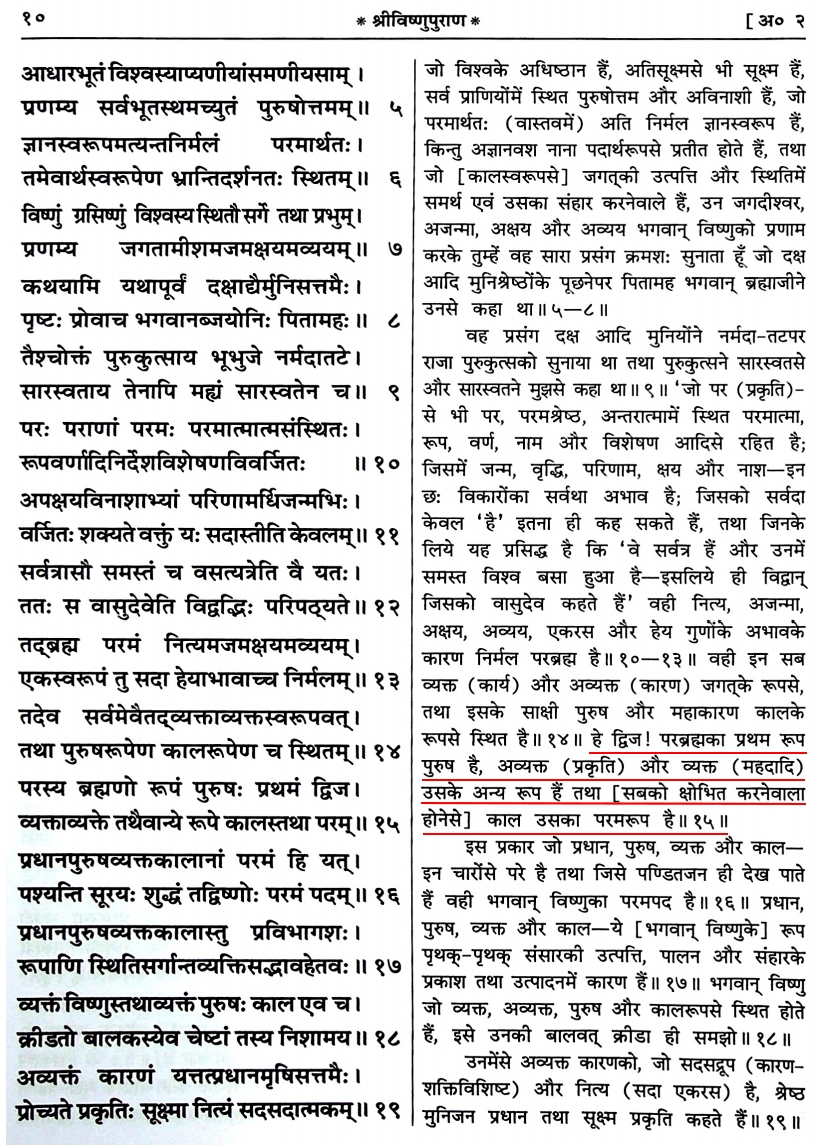
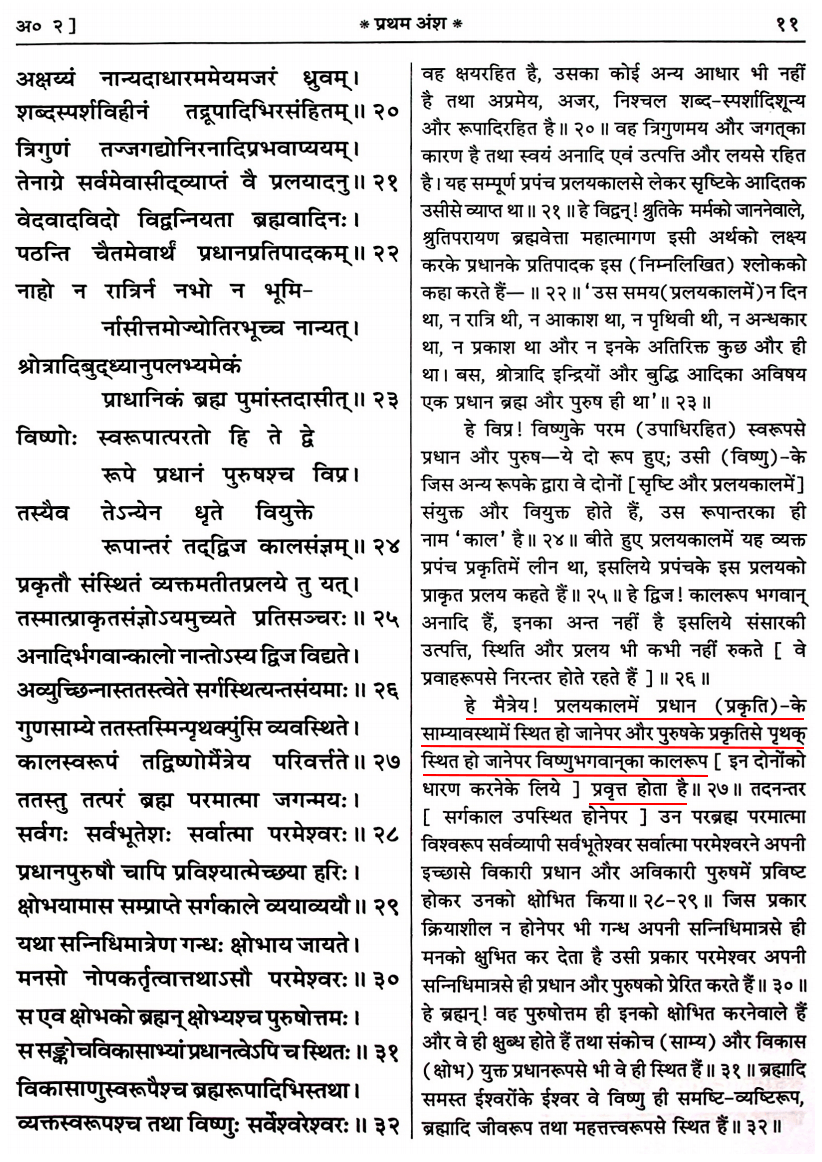
Vishnu Purana | Pratham Ansh | Adhyay 2 | Verse 15
Sanskrit Verses:
परस्य ब्रह्मणो रूपं पुरुषः प्रथमं द्विज।
व्यक्ताव्यक्ते तथैवान्ये रूपे कालस्तथा परम्॥ १५॥
Hindi Translation (Gita Press):
हे द्विज! परब्रह्मका प्रथम रूप 'पुरुष' है, 'अव्यक्त' (प्रकृति) और 'व्यक्त' (महदादि) उसके अन्य रूप हैं तथा 'काल' उसका परम रूप है॥ १५॥
English Context:
The supreme reality manifests through different instruments. The primary form is Purusha (Spirit), followed by Avyakta (Unmanifest Nature), Vyakta (Manifest Matter), and ultimately Kaal, which is described as the supreme form governing universal processes.
Vishnu Purana | Pratham Ansh | Adhyay 2 | Verse 27
Sanskrit Verses:
गुणसाम्ये ततस्तस्मिन्पृथक्पुंसि व्यवस्थिते।
कालस्वरूपं तद्विष्णोर्मैत्रेय परिवर्तते॥ २७॥
Hindi Translation (Gita Press):
हे मैत्रेय! प्रलयकालमें प्रधान (प्रकृति) के साम्यावस्थामें स्थित हो जानेपर और पुरुषके प्रकृतिसे पृथक् स्थित हो जानेपर विष्णुभगवान्का 'काल रूप' [इन दोनोंको धारण करनेके लिये] प्रवृत्त होता है॥ २७॥
English Context:
During the cosmic dissolution, when nature enters a state of equilibrium and Spirit is separated from matter, the hidden Kaal-Swaroop of the Lord activates to govern and sustain both states until the next cycle of creation begins surreptitiously.
Vishnu Puran - Video
Kaal possesses others to accomplish his tasks and thereby remains hidden
Kaal entered in Shri Krishan ji at the time of Mahabharata and caused the battle of Mahabharata. Vishnu Puran gives various examples of God Kaal entering in to other people and accomplishing various tasks. God Kaal doesnt appear in his actual form and thus remains hidden.
Vishnu Purana - Chaturth Ansh, Adhyay 2, Verse 21-26
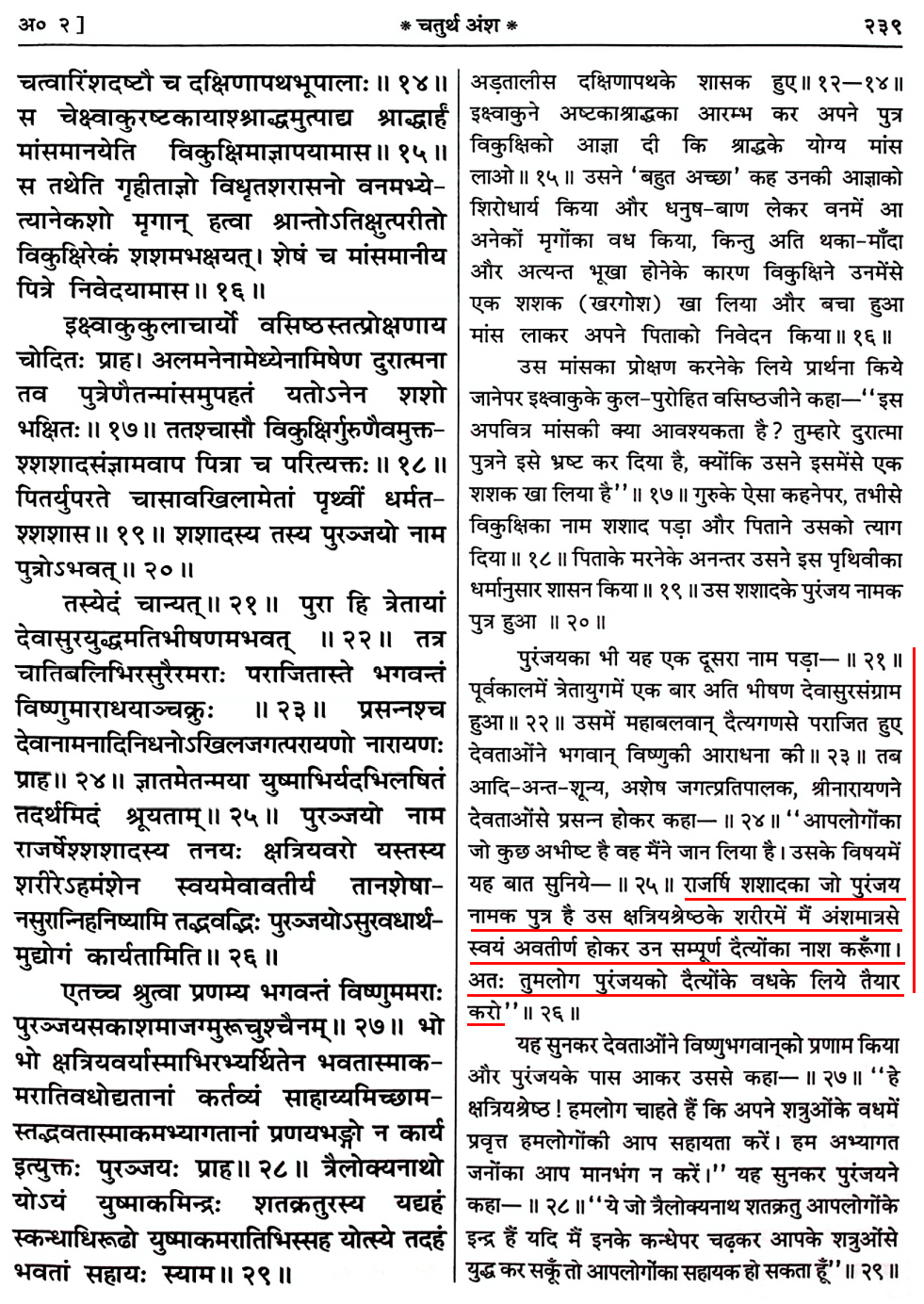
Vishnu Purana | Chapter 2 | Verse 21-26 - English Translation
In the Treta age, a violent war broke out between the gods and the Asuras, in which the former were vanquished. They, consequently, had recourse to Vishnu, for assistance, and propitiated him (by their adorations). The eternal ruler of the universe, Narayana, had compassion upon them, and said: “What you desire is known unto me. Hear how your wishes shall be fulfilled. There is an illustrious prince named Puranjaya the son of a royal sage: into his body I will infuse a portion of myself; and, having descended upon earth, I will, through his body, subdue all your enemies. You, therefore, endeavour to secure the aid of Puranjaya, for the destruction of your foes.”
Vishnu Purana - Chaturth Ansh, Adhyay 3, Verse 4-6
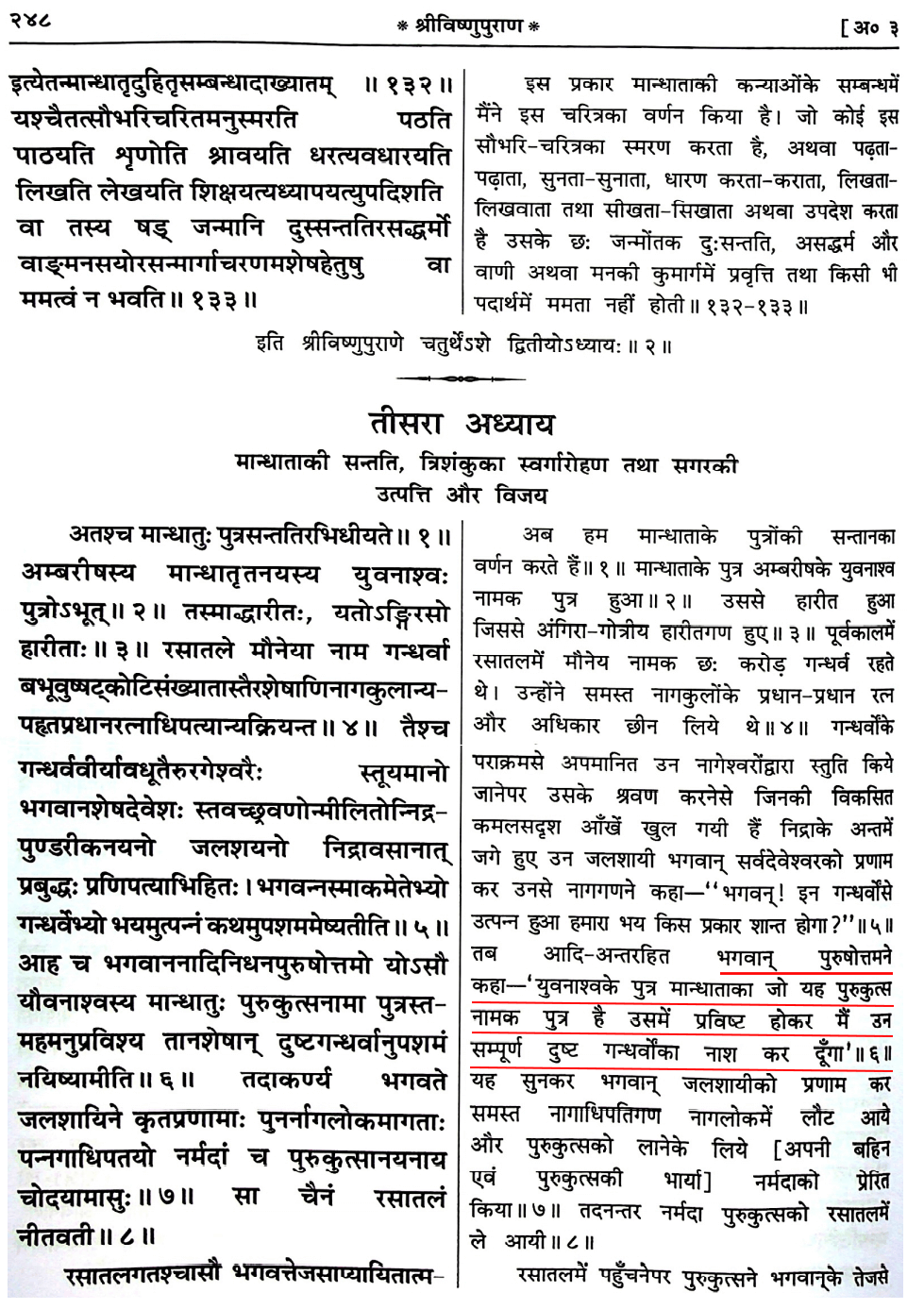
Vishnu Purana | Chapter 3 | Verse 4-6 - English Translation
"In the regions below the earth, the Gandharvas called Mauneya (or, sons of the Muni Kasyapa), who were sixty millions in number, had defeated the tribes of the Nagas (or snake-gods), and seized upon their most precious jewels, and usurped their dominion. Deprived of their power by the Gandharvas, the serpent-chiefs addressed the god of the gods, as he awoke from his slumbers; and the blossoms of his lotus-eyes opened, while listening to their hymns. They said: “Lord, how shall we be delivered from this great fear?” Then replied - the first of males, who is without beginning: “I will enter into the body of Purukutsa, the son of Mandhatri, the son of Yuvanaswa; and through him will I quiet these iniquitous Gandharvas.” On hearing these words, the snake-gods bowed and With- drew, and, returning to their country, despatched Narmada, to solicit the aid of Purukutsa.
Conclusion: The Hidden Framework of God Kaal
In summary, a comprehensive analysis of the Vishnu Purana highlights a consistent metaphysical theme: the supreme controller, God Kaal (Brahm), routinely executes cosmic administration from behind a veil. Whether manifesting through the authoritative form of Mahavishnu during universal structural adjustments, or directly infusing a portion of his energy into historical figures like Prince Puranjaya and Purukutsa, Kaal strictly adheres to his pledge of remaining unmanifest to the worldly eye. For spiritual seekers, recognizing these hidden scriptural mechanisms - especially within the verified editions of the Gita Press Gorakhpur text - is essential for distinguishing between passing material instruments and the ultimate divine reality.
Read in detail about Sadashiv form of Kaal in Shiv Purana
References
- Vishnu Purana - Gita Press Gorakhpur
- Vishnu Purana - Purunjaya prakaran
- Vishnu Purana - Purukutsa
- Vishnu Purana - English - Purukutsa
Vishnu Purana: Summary, Structure, and Key Teachings Vishnu Purana Shraadh Method: Power of a Yogi Explained